Ultrasonic Transducer Manufacturer –
Industrial & Custom OEM Solutions
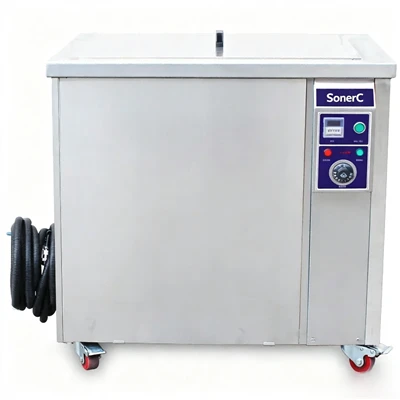
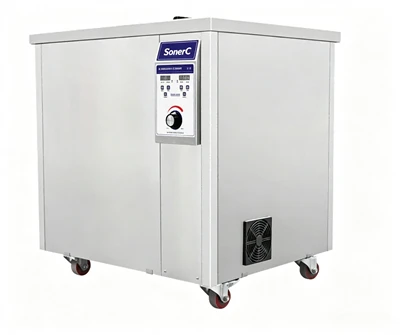
With over 20 years of experience in the ultrasonic industry, Soner Tech specializes in the design and production of ultrasonic transducers for various applications. Over the past two decades, we have established a complete manufacturing chain, including a transducer design workshop, metal workshop, injection workshop, electronics workshop, and an in-house testing laboratory. We can provide your Industrial and OEM &ODM solutions to meet your production demands.
Why choose us
We are a professional ultrasonic transducer factory and wholesaler in China. We can provide you with consistent products and provide you with custom ultrasonic transducer OEM service.
Vertically integrated manufacturing
- We are a professional ultrasonic transducer manufacturer in China. With over 20 years of development, we have established our own complete in-house production system, covering piezoelectric ceramic production, hardware components manufacturing, and ultrasonic transducer assembly workshops.
- As a professional ultrasonic transducer supplier, we have obtained the formulation of the piezoelectric ceramic such as PZT-4 and PZT-8. With our 20years experience, we can adjust the formualtion to meet your custom Frequency and the size of the piezoelectric ceramic to accomplish your product demands.
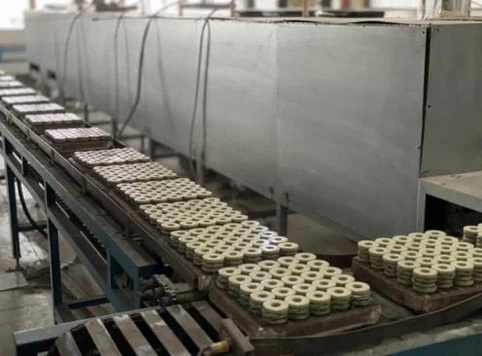
- We have three sintering furnaces to produce the piezo ceramic, with a monthly output that can reach 10,000 pcs of piezo ceramic.
High-Temperature Sintering Furnace for Piezoceramics
Piezo Poling System

Rich Experience
With over 20 years of experience, we combine our rich design experience and mature production capabilities to deliver reliable ultrasonic transducers to our global customers.
Custom Ultrasonic Transducer OEM Services
We provide professional OEM services tailored to customers’ specific requirements for ultrasonic transducers.
Customization starts from ultrasonic piezoelectric ceramic chips, including customized design and development. We also customize the appearance and structure of transducer hardware.
In this way, we fully meet customers’ personalized demands for transducer frequency, size, and performance.
Quality Control
Our factory has ISO 9001 certification, and all the design and production procedures are strictly operated in accordance with the ISO 9001 Quality system. This ensures our product has consistent quality.
-
![40kHz 60W Ultrasonic Cleaning Transducer]() 40kHz 60W Ultrasonic Cleaning Transducer40 khz 60W ultrasonic cleaning transducer have relative smaller size than 100W ultrasonic transducer 40 khz, that is because the power is determined by the size of piezo ring. The transducer...view more
40kHz 60W Ultrasonic Cleaning Transducer40 khz 60W ultrasonic cleaning transducer have relative smaller size than 100W ultrasonic transducer 40 khz, that is because the power is determined by the size of piezo ring. The transducer...view more -
![8MHz High Frequency Ultrasound Transducer for Pipeline Ultrasonic Testing]() 8MHz High Frequency Ultrasound Transducer for Pipeline Ul...Our high frequency ultrasound transducer is 8MHz dual element straight contact UT probe which is designed for use in pipelines in a non-aggressive flow liquid, oil and petroleum products under...view more
8MHz High Frequency Ultrasound Transducer for Pipeline Ul...Our high frequency ultrasound transducer is 8MHz dual element straight contact UT probe which is designed for use in pipelines in a non-aggressive flow liquid, oil and petroleum products under...view more -
![40Khz 100W Ultrasonic Cleaning Transducer]() 40Khz 100W Ultrasonic Cleaning Transducer40 khz 100W ultrasonic cleaning transducer can generate 100W ultrasonic cleaning power at 40 khz ultrasonic frequency, which is much more powerful comparing to 60W ultrasonic power. It can save...view more
40Khz 100W Ultrasonic Cleaning Transducer40 khz 100W ultrasonic cleaning transducer can generate 100W ultrasonic cleaning power at 40 khz ultrasonic frequency, which is much more powerful comparing to 60W ultrasonic power. It can save...view more -
![Ultrasonic Skin Tightening Transducer]() Ultrasonic Skin Tightening TransducerThe QM 650 series operates at 1.1 MHz and is designed for skin-tightening equipment. It uses a dual-crystal design (Φ25mm + Φ15mm) to support different treatment head configurations. The housing...view more
Ultrasonic Skin Tightening TransducerThe QM 650 series operates at 1.1 MHz and is designed for skin-tightening equipment. It uses a dual-crystal design (Φ25mm + Φ15mm) to support different treatment head configurations. The housing...view more -
![28 KHz And 40 KHz Dual Frequency Ultrasonic Cleaning Transducer For Ultrasonic Cleaning Machine]() 28 KHz And 40 KHz Dual Frequency Ultrasonic Cleaning Tran...The 28 KHz and 40 KHz dual-frequency ultrasonic cleaning transducer for ultrasonic cleaning machines has dual ultrasonic frequencies, which are 28 KHz and 40 KHz, just like the 28 KHz ultrasonic...view more
28 KHz And 40 KHz Dual Frequency Ultrasonic Cleaning Tran...The 28 KHz and 40 KHz dual-frequency ultrasonic cleaning transducer for ultrasonic cleaning machines has dual ultrasonic frequencies, which are 28 KHz and 40 KHz, just like the 28 KHz ultrasonic...view more -
![Ultrasonic Eye Contour Transducer]() Ultrasonic Eye Contour TransducerA 25mm ultrasonic transducer engineered for precision treatment of delicate facial zones. With QM 360 and 304 stainless steel construction, this transducer delivers concentrated energy for the...view more
Ultrasonic Eye Contour TransducerA 25mm ultrasonic transducer engineered for precision treatment of delicate facial zones. With QM 360 and 304 stainless steel construction, this transducer delivers concentrated energy for the...view more -
![1MHz Ultrasonic Body Transducer]() 1MHz Ultrasonic Body TransducerBody Slimming, Fat Reduction, Body Contouring & Cavitation OEM Large Area Piezoelectric Body Transducer | 44.88mm Crystal Diameter | 15-25mm Deep Tissue Penetration | QM 248 | 304 Stainless Steel...view more
1MHz Ultrasonic Body TransducerBody Slimming, Fat Reduction, Body Contouring & Cavitation OEM Large Area Piezoelectric Body Transducer | 44.88mm Crystal Diameter | 15-25mm Deep Tissue Penetration | QM 248 | 304 Stainless Steel...view more -
![1MHz Ultrasonic Facial Transducer]() 1MHz Ultrasonic Facial TransducerThe 30 mm, 1 MHz ultrasonic facial transducer is the industry-standard piezoelectric crystal component for face massager devices, skin care wands, and HIFU facial equipment. Featuring in-house...view more
1MHz Ultrasonic Facial TransducerThe 30 mm, 1 MHz ultrasonic facial transducer is the industry-standard piezoelectric crystal component for face massager devices, skin care wands, and HIFU facial equipment. Featuring in-house...view more -
![1MHz & 3MHz Dual Frequency Ultrasonic Beauty Transducer]() 1MHz & 3MHz Dual Frequency Ultrasonic Beauty TransducerThe 1 MHz and 3 MHz dual-frequency ultrasonic beauty transducer is designed for aesthetic equipment manufacturers seeking integrated dual-frequency capability. This dual frequency approach...view more
1MHz & 3MHz Dual Frequency Ultrasonic Beauty TransducerThe 1 MHz and 3 MHz dual-frequency ultrasonic beauty transducer is designed for aesthetic equipment manufacturers seeking integrated dual-frequency capability. This dual frequency approach...view more -
![Piezo Ceramic Transducer for Ultrasonic Cleaning]() Piezo Ceramic Transducer for Ultrasonic CleaningPiezo Ceramic Transducer for Ultrasonic Cleaning is the key component of Ultrasonic cleaning transducer, convert the sound energy of the high-power ultrasonic frequency source into mechanical...view more
Piezo Ceramic Transducer for Ultrasonic CleaningPiezo Ceramic Transducer for Ultrasonic Cleaning is the key component of Ultrasonic cleaning transducer, convert the sound energy of the high-power ultrasonic frequency source into mechanical...view more -
![28KHz 60W Ultrasonic cleaning transducer]() 28KHz 60W Ultrasonic cleaning transducerThe 28KHz 60W Ultrasonic cleaning transducer is a common specific ultrasonic transducer in the industries, The size is smaller then 100W ultrasonic transducer. But it is need more units to...view more
28KHz 60W Ultrasonic cleaning transducerThe 28KHz 60W Ultrasonic cleaning transducer is a common specific ultrasonic transducer in the industries, The size is smaller then 100W ultrasonic transducer. But it is need more units to...view more -
![Low Frequency Ultrasonic Transducer]() Low Frequency Ultrasonic TransducerLow-frequency ultrasonic transducer is a core subcategory of ultrasonic cleaning transducer, which is a kind of low-frequency bolt-clamped Langevin structure. It has efficient bidirectional...view more
Low Frequency Ultrasonic TransducerLow-frequency ultrasonic transducer is a core subcategory of ultrasonic cleaning transducer, which is a kind of low-frequency bolt-clamped Langevin structure. It has efficient bidirectional...view more


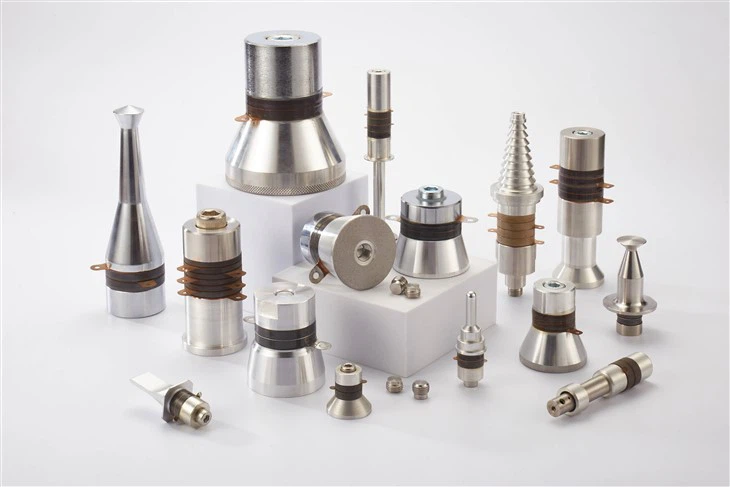
As the professional piezoelectric ultrasonic transducer wholesale and the manufacturer in china, we have following Ultrasonic transducer: Ultrasonic cleaning transducer, ultrasonic beauty transducer, ultrasonic welding transducer, and ultrasonic stirring transducer.
Types of Ultrasonic Transducer


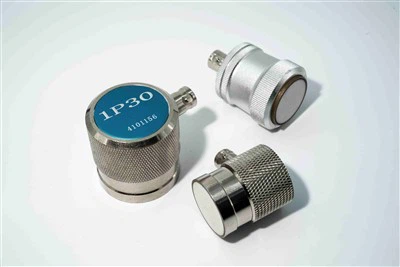

Our Service
Sample Policy
The sample fee will be refunded if the mass order is confirmed.
Sample Lead time: 7 days
Payment
We accept T/T and L/C payment methods.
Incoterms
We provide EX Work, FOB, or C&F quote terms, and our loading port is Shenzhen, China.
After-sales service
Installation and commissioning of specific products; respond to consumer questions, answer consumer inquiries, and deal with consumer comments.
FAQ
Q: What frequency ultrasonic transducer do I need for cleaning?
A: The right frequency depends on your cleaning application and the type of contaminants you need to remove:
**28 kHz** — Best for heavy industrial parts: engine blocks, gears, castings, and components with stubborn oil, rust, or buffing compound. Lower frequency produces larger cavitation bubbles with stronger cleaning force and deeper penetration.
**40 kHz** — The industry standard for general-purpose cleaning: machined parts, medical instruments, injection molds, and electronic components. Offers a balance of cleaning power and surface safety. This is the most common frequency in industrial ultrasonic cleaners worldwide.
**68–120 kHz** — For delicate precision parts: semiconductor wafers, optical lenses, and surgical instruments. Higher frequency creates smaller, gentler cavitation bubbles that clean without surface damage.
**Dual-frequency (28/40 kHz)** — When your production line handles varied parts, a dual-frequency transducer lets you switch between deep power and fine cleaning in a single tank.
**Rule of thumb:** The heavier the contamination and the more robust the part, the lower the frequency. The more delicate the part, the higher the frequency.
Explore our cleaning transducer range:
- 40kHz 60W Ultrasonic Cleaning Transducer
- 40kHz 100W Ultrasonic Cleaning Transducer
- 28kHz/40kHz Dual-Frequency Transducer
Q: How to choose the right piezoelectric ceramic for your transducer?
The piezoelectric ceramic is the core component of every ultrasonic transducer—it converts electrical energy into mechanical vibration. Choosing the right piezo ceramic directly determines your transducer's performance, durability, and cost.
Key factors when selecting piezo ceramics:
1. **PZT Grade Selection:**
- **PZT-4 (Hard PZT):** Low dielectric loss, high power handling. Best for ultrasonic cleaning and welding transducers that run at high power for extended periods.
- **PZT-8 (Hard PZT, High Power):** Even lower loss than PZT-4. Ideal for continuous-duty heavy industrial cleaning and high-power ultrasonic processing.
- **PZT-5 (Soft PZT):** High dielectric constant, high sensitivity. Better for sensors and NDT probes where receiving sensitivity matters more than power transmission.
2. **Frequency Matching:** The ceramic must be sized and shaped to resonate at your target frequency. A 40 kHz transducer requires a different ceramic geometry than a 28 kHz unit.
3. **Size and Configuration:** Ring-shaped (annular) ceramics are most common in Langevin-type transducers. The diameter and thickness determine the resonant frequency and power output.
4. **Operating Temperature:** Standard PZT ceramics are rated for up to 250°C. For high-temperature applications, specialized formulations are required.
**Soner Tech's advantage:** We produce our own piezoelectric ceramics in-house with three sintering furnaces and a monthly capacity of 10,000+ pieces. We hold the formulations for PZT-4 and PZT-8, and can adjust the formulation to meet your custom frequency, size, and performance requirements.
View our Piezo Ceramic Transducer for Ultrasonic Cleaning
Contact us to discuss your piezo ceramic specifications
Q: How does an ultrasonic transducer work?
A: An ultrasonic transducer works on the **piezoelectric effect**—the ability of certain ceramic materials to convert electrical energy into mechanical energy and vice versa.
The process in 4 steps:
1. **Electrical Input:** An ultrasonic generator produces a high-frequency AC electrical signal (e.g., 40 kHz, matching the transducer's resonant frequency).
2. **Piezoelectric Conversion:** Inside the transducer, piezoelectric ceramic rings (typically PZT-4 or PZT-8) receive the electrical signal. The piezo material physically expands and contracts in response to the alternating voltage—at the same frequency as the input signal.
3. **Mechanical Amplification:** The piezo ceramic's micro-vibrations are transferred through a metal front mass (usually aluminum or titanium) and a back mass (steel), which together form a Langevin (sandwich) structure. This structure amplifies the vibration and couples it efficiently to the load.
4. **Ultrasonic Wave Emission:** The amplified mechanical vibration is transmitted into the surrounding medium—typically the cleaning liquid in the tank. This creates rapid pressure fluctuations that generate **cavitation**: millions of microscopic bubbles form and implode, releasing energy that dislodges contaminants from part surfaces.
Why frequency matters:
- Lower frequencies (20–28 kHz) produce larger, more energetic cavitation bubbles—stronger cleaning force.
- Higher frequencies (40–120 kHz) produce smaller, gentler bubbles—finer, more precise cleaning.
- In NDT applications (1–15 MHz), the transducer sends short ultrasonic pulses through materials and receives the echoes to detect internal flaws.
At Soner Tech, we manufacture the complete transducer assembly in-house—from piezo ceramic production to final housing and testing—ensuring full control over performance and quality.
Q:Who manufactures ultrasonic transducers in China?
A: Soner Tech (Shenzhen, China) is a professional ultrasonic transducer manufacturer with over 20 years of industry experience. We are not a trading company—we operate our own complete manufacturing facility.
What sets Soner Tech apart from other Chinese suppliers:
- **Vertically integrated manufacturing:** Unlike most transducer suppliers who assemble from purchased components, we produce our own piezoelectric ceramics (PZT-4, PZT-8), machine our own metal hardware, and assemble finished transducers in-house. Three sintering furnaces, monthly ceramic output of 10,000+ pieces.
- **ISO 9001 Certified Quality:** Our entire design and production process follows ISO 9001:2015 quality management protocols. Every transducer undergoes frequency, impedance, and power testing before shipment.
- **OEM/ODM capability:** We engineer custom transducers to your specifications—custom frequency, power, size, housing, and connector types. 7-day sample lead time.
- **Complete product range:**
- Ultrasonic cleaning transducers (28 kHz, 40 kHz, dual-frequency, 60W–200W)
- Ultrasonic beauty transducers (1 MHz, 3 MHz, dual-frequency)
- High-frequency NDT probes (up to 8 MHz dual-element)
- Low-frequency bolt-clamped Langevin transducers
- Piezoelectric ceramic elements (custom formulations available)
- **Global supply experience:** We serve industrial cleaning equipment manufacturers, beauty device brands, and NDT equipment providers worldwide.
How to verify a Chinese transducer manufacturer:
1. Ask for their ISO 9001 certificate (not just a claimed "ISO compliant")
2. Ask whether they produce their own piezo ceramics or purchase from third parties
3. Request a factory photo or video tour of the production line
4. Order a sample to test performance in your actual application
Q: What is the difference between high-frequency and low-frequency ultrasonic transducers?
A:The difference between high-frequency and low-frequency ultrasonic transducers comes down to **wavelength, penetration depth, and application suitability.
In cleaning applications (the "low" end of the spectrum):
- **28 kHz:** Heaviest cleaning force—for large industrial parts with stubborn contamination
- **40 kHz:** Standard industrial cleaning—the most versatile and widely used
- **68–120 kHz:** Precision cleaning—for delicate parts where surface damage is a concern
In NDT applications (the "high" end):
- **1–5 MHz:** Deep penetration for thick steel, pipes, and pressure vessels
- **5–10 MHz:** Medium penetration for aerospace composites, precision welds
- **10+ MHz:** High resolution for thin materials, semiconductor wafers, medical imaging
**Dual-frequency cleaning transducers (28/40 kHz):** These combine the deep-cleaning power of 28 kHz with the finer cleaning capability of 40 kHz in a single unit—ideal for production lines that handle diverse part types.
- View our 8MHz High-Frequency NDT Transducer
- View our 28kHz/40kHz Dual-Frequency Cleaning Transducer
- View our Low-Frequency Transducers
|
Specification |
Low Frequency (20-40 kHz) |
High Frequency (1-15 MHz) |
|
Primary use |
Ultrasonic cleaning and welding |
Non-destructive testing (NDT) |
|
Cavitation |
Strong, large bubbles |
Minimal - pulse-echo mode |
|
Wavelength |
~37mm in water at 40 kHz |
~0.3mm in steel at 5 MHz |
|
Typical power |
60W-500W per transducer |
0.1W-5W (pulsed) |
|
Applications |
Parts cleaning, beauty, welding |
Pipeline/weld inspection, imaging |
Shenzhen Soner Technology Co., Ltd. is one of the most professional ultrasonic transducer manufacturers and suppliers in China, specialized in providing high quality customized service. Please feel free to wholesale ultrasonic transducer for sale here from our factory.
ultrasonic transducer for ultrasonic detection of fisheries products, ultrasonic transducer for, ultrasonic transducer for ultrasonic detection of ultrasonic detection of metal components