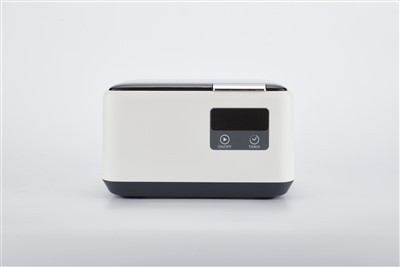
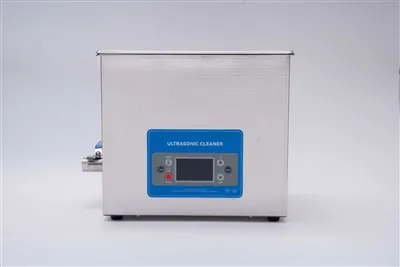
Hey there, DIY enthusiasts! If you're into building your own ultrasonic parts cleaner, one of the most crucial decisions you'll make is choosing the right power supply. As a supplier of DIY Ultrasonic Parts Cleaner kits, I've seen firsthand the impact that the right power supply can have on the performance and longevity of your cleaner. In this blog post, I'll break down everything you need to know about selecting the perfect power supply for your DIY project.
Understanding the Basics of Ultrasonic Cleaning
Before we dive into power supplies, let's quickly go over how ultrasonic cleaning works. Ultrasonic cleaners use high-frequency sound waves to create tiny bubbles in a cleaning solution. These bubbles collapse, creating a phenomenon called cavitation, which generates intense pressure waves that dislodge dirt and grime from the surface of the parts being cleaned.
The power supply is responsible for providing the electrical energy needed to generate these high-frequency sound waves. Without a proper power supply, your ultrasonic cleaner won't be able to produce the necessary cavitation, and your cleaning results will suffer.
Factors to Consider When Choosing a Power Supply
1. Power Output
The power output of a power supply is measured in watts. The higher the wattage, the more powerful the ultrasonic cleaner will be. When choosing a power supply, you need to consider the size of your cleaning tank and the type of parts you'll be cleaning.
For small cleaning tanks (up to 5 liters), a power supply with an output of 30 - 60 watts should be sufficient. This is ideal for cleaning small parts like jewelry, watch components, and small electronic parts.
If you have a medium-sized cleaning tank (5 - 10 liters), you'll need a power supply with an output of 60 - 120 watts. This can handle larger parts like carburetors, small engine components, and bicycle parts.
For large cleaning tanks (10 liters and above), you'll need a power supply with an output of 120 watts or more. This is suitable for heavy-duty cleaning tasks, such as cleaning industrial parts or large motorcycle components.
2. Frequency
The frequency of an ultrasonic cleaner refers to the number of sound waves produced per second, measured in hertz (Hz). Most ultrasonic cleaners operate at frequencies between 20,000 Hz (20 kHz) and 40,000 Hz (40 kHz).
Lower frequencies (20 - 25 kHz) produce larger bubbles, which are more effective at removing heavy dirt and grime from large parts. Higher frequencies (35 - 40 kHz) produce smaller bubbles, which are better for delicate parts and removing fine particles.
When choosing a power supply, make sure it can support the frequency range that's appropriate for your cleaning needs. Some power supplies allow you to adjust the frequency, giving you more flexibility in your cleaning.
3. Voltage and Current
The voltage and current requirements of your power supply will depend on the specific ultrasonic transducer you're using in your cleaner. Transducers are the components that convert electrical energy into ultrasonic sound waves.
Most ultrasonic transducers operate at a voltage of 220 - 240 volts or 110 - 120 volts, depending on your location. Make sure the power supply you choose can provide the correct voltage for your transducer.
The current rating of the power supply should also match the requirements of the transducer. If the current is too low, the transducer won't operate at its full capacity. If the current is too high, it can damage the transducer.
4. Stability and Reliability
A stable and reliable power supply is essential for the proper functioning of your ultrasonic cleaner. Look for a power supply that has built-in protection features, such as over-voltage protection, over-current protection, and short-circuit protection. These features will help prevent damage to your cleaner and ensure its long-term reliability.
Types of Power Supplies for Ultrasonic Cleaners
1. Switching Power Supplies
Switching power supplies are the most common type of power supply used in ultrasonic cleaners. They are compact, efficient, and can provide a stable output voltage. Switching power supplies work by rapidly switching the input voltage on and off, which allows them to convert the input voltage to the desired output voltage with minimal energy loss.
One of the advantages of switching power supplies is that they can be easily adjusted to provide different output voltages and currents. This makes them suitable for a wide range of ultrasonic cleaning applications.


2. Linear Power Supplies
Linear power supplies are less common in ultrasonic cleaners but are still used in some applications. They work by using a transformer to step down the input voltage and a regulator to maintain a constant output voltage.
Linear power supplies are known for their simplicity and reliability. They produce less electrical noise than switching power supplies, which can be beneficial for some sensitive cleaning applications. However, they are less efficient than switching power supplies and can generate more heat.
Recommended Power Supplies for Different Applications
For Small DIY Ultrasonic Cleaners
If you're building a small DIY ultrasonic cleaner for cleaning jewelry, watch components, or small electronic parts, I recommend a switching power supply with an output of 30 - 60 watts. One option is the 15L Capacity Heavy - Duty Parts Cleaning Machine, which can be adjusted to provide the right amount of power for your small cleaning tank.
For Medium - Sized DIY Ultrasonic Cleaners
For medium - sized cleaning tanks used for cleaning bicycle parts, small engine components, or carburetors, a switching power supply with an output of 60 - 120 watts is a good choice. The Ultrasonic bike chain cleaner is a great option as it provides a stable power output and can handle the demands of medium - sized cleaning tasks.
For Large DIY Ultrasonic Cleaners
If you're building a large DIY ultrasonic cleaner for heavy - duty cleaning tasks, such as cleaning industrial parts or large motorcycle components, you'll need a power supply with an output of 120 watts or more. The Ultrasonic Cleaner For Bike Parts can be a suitable power supply for large cleaning tanks, providing the high power output needed for effective cleaning.
Conclusion
Choosing the right power supply for your DIY ultrasonic parts cleaner is crucial for achieving optimal cleaning results. By considering factors such as power output, frequency, voltage, current, stability, and reliability, you can select a power supply that meets your specific cleaning needs.
Whether you're a hobbyist looking to clean small parts or a professional in need of a heavy - duty cleaning solution, we have the right DIY Ultrasonic Parts Cleaner kits and power supplies for you. If you have any questions or need help choosing the right power supply for your project, don't hesitate to reach out to us. We're here to assist you in creating the perfect ultrasonic cleaner for your needs. Let's start the conversation and get you on the path to cleaner parts!
References
- Ultrasonic Cleaning Technology Handbook
- DIY Ultrasonic Cleaner Building Guides
- Manufacturer's Specifications for Ultrasonic Transducers and Power Supplies