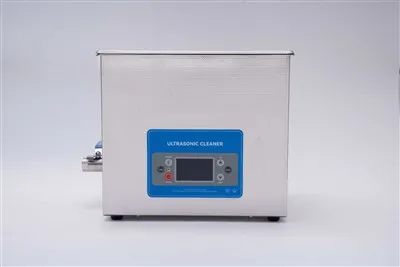
Hey there! As a supplier of 40KHz ultrasonic transducers, I've been getting a lot of questions lately about how the acoustic impedance of these transducers affects their coupling with the medium. So, I thought I'd take a deep - dive into this topic and share some insights with you all.
First things first, let's talk about what acoustic impedance is. Acoustic impedance (Z) is basically the product of the density (ρ) of a medium and the speed of sound (c) in that medium, i.e., Z = ρ * c. It's a measure of how much a medium resists the propagation of acoustic waves. When an ultrasonic transducer emits sound waves, it needs to transfer energy efficiently to the medium it's in contact with. And this is where acoustic impedance comes into play.
In the case of a 40KHz ultrasonic transducer, the ideal situation is to have a good match between the acoustic impedance of the transducer and the medium. If there's a large mismatch in acoustic impedance, a significant amount of the ultrasonic energy gets reflected at the interface between the transducer and the medium. You can think of it like trying to push a heavy object through a thick wall. A lot of your energy gets wasted just trying to break through. Similarly, when the acoustic impedance values are far apart, the efficiency of energy transfer from the transducer to the medium drops significantly.
Let's consider some practical scenarios to better understand this.

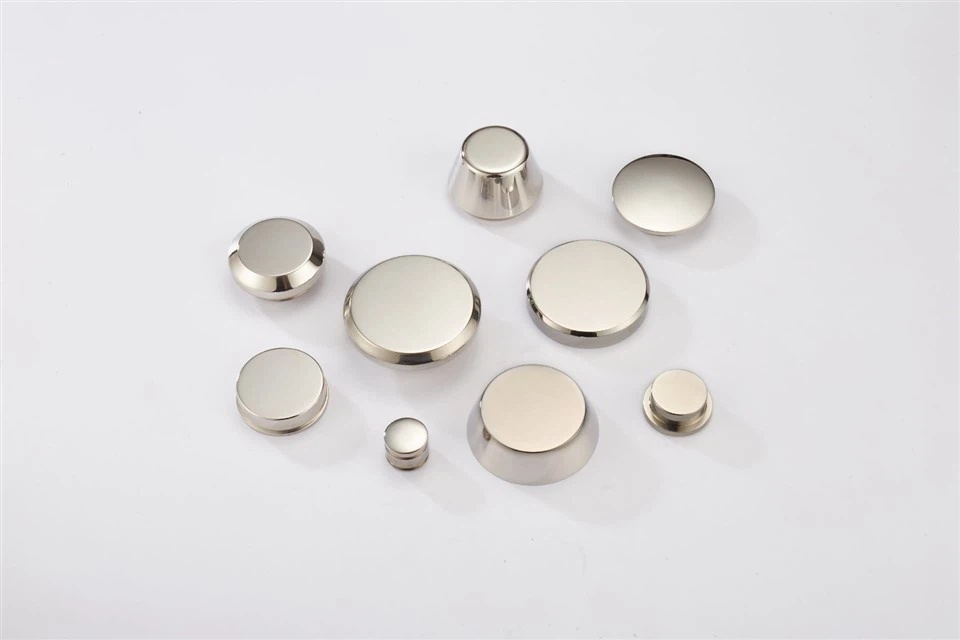
Ultrasonic Cleaning Applications
In ultrasonic cleaning, we use Piezo Ceramic Transducer for Ultrasonic Cleaning. The medium here is usually water or a cleaning solution. The acoustic impedance of water is different from that of the piezoelectric material used in the transducer. To improve the coupling, we often use a matching layer. This matching layer has an acoustic impedance that falls between that of the transducer and the water. It acts as a bridge, facilitating a smoother transfer of ultrasonic energy from the transducer to the water. This way, more energy is available to create cavitation bubbles in the water, which are responsible for the actual cleaning action.
If the acoustic impedance mismatch is not properly addressed, the cleaning efficiency will be low. You might end up with longer cleaning times and less thorough cleaning. The transducer will have to work harder to achieve the desired cleaning effect, which can also lead to increased wear and tear on the transducer itself.
Ultrasonic Beauty Applications
Now, let's shift our focus to ultrasonic beauty applications. We offer transducers like Ultrasonic Skin Tightening Transducer and 1MHz Ultrasonic Body Transducer. When it comes to skin or body treatments, the medium is the human tissue. The acoustic impedance of human tissue varies depending on factors like the type of tissue (e.g., fat, muscle, skin) and its moisture content.
For effective treatment, the acoustic impedance of the transducer needs to be as close as possible to that of the target tissue. If there's a large impedance mismatch, most of the ultrasonic energy will be reflected back at the skin - transducer interface. This means less energy reaches the deeper layers of the tissue where the treatment is supposed to take place. For example, in skin tightening treatments, the ultrasonic waves need to penetrate the skin and stimulate collagen production in the dermis. If the coupling is poor due to impedance mismatch, the treatment won't be as effective, and the client may not see the desired results.
To overcome this issue, we often use coupling gels in beauty treatments. These gels have an acoustic impedance that is close to both the transducer and the skin. They fill in any air gaps between the transducer and the skin, ensuring better contact and more efficient energy transfer.
How to Optimize the Acoustic Impedance for Coupling
As a supplier, we take several steps to optimize the acoustic impedance of our 40KHz ultrasonic transducers for different applications.
- Material Selection: We carefully choose the piezoelectric materials for our transducers. Different materials have different acoustic impedance values, and we select the ones that are most suitable for the intended application. For example, for applications where the medium has a relatively low acoustic impedance, we might choose a piezoelectric material with a lower impedance to reduce the mismatch.
- Matching Layer Design: We design custom - made matching layers for our transducers. These layers are engineered to have an acoustic impedance that bridges the gap between the transducer and the medium. The thickness and composition of the matching layer are carefully calculated to maximize energy transfer.
- Testing and Calibration: Before shipping out our transducers, we conduct extensive testing and calibration. We measure the acoustic impedance of the transducers and test them with different media. This allows us to fine - tune the design and ensure that the transducers offer optimal coupling performance.
Why Choose Our 40KHz Ultrasonic Transducers
Our transducers are designed with all these acoustic impedance considerations in mind. We've spent years researching and developing our products to ensure that they offer the best possible coupling with a wide range of media. Whether you're in the ultrasonic cleaning industry or the beauty industry, our transducers are built to deliver high - performance and efficient energy transfer.
If you're in the market for 40KHz ultrasonic transducers or have any questions about acoustic impedance and its impact on coupling, don't hesitate to reach out. We're here to help you find the perfect solution for your specific needs. Whether you're looking for a transducer for a new project or need to replace an existing one, we've got you covered.
Start a conversation with us today to discuss your requirements and see how our 40KHz ultrasonic transducers can make a difference in your applications.
References
- Kinsler, L. E., Frey, A. R., Coppens, A. B., & Sanders, J. V. (2000). Fundamentals of Acoustics (4th ed.). Wiley.
- Povey, M. J. W. (2005). Ultrasonic Waves: Measurement, Instrumentation, and Nondestructive Testing. CRC Press.