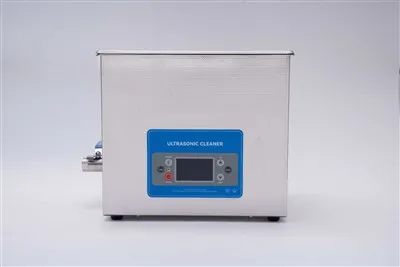
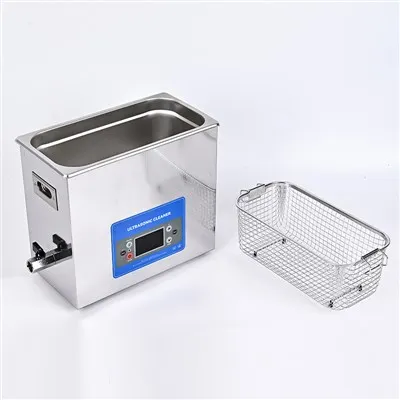
In the industrial cleaning sector, large ultrasonic parts cleaners have become indispensable tools for ensuring the cleanliness and functionality of various components. As a supplier of large ultrasonic parts cleaners, I've witnessed firsthand the diverse needs of our clients and the critical role that cleaning time plays in achieving optimal cleaning quality. This blog post delves into the intricate relationship between cleaning time and cleaning quality in large ultrasonic parts cleaners, offering insights based on industry knowledge and practical experience.
Understanding the Basics of Ultrasonic Cleaning
Before exploring the relationship between cleaning time and quality, it's essential to understand how ultrasonic cleaning works. Ultrasonic cleaners utilize high - frequency sound waves, typically in the range of 20 to 400 kHz, to create millions of microscopic bubbles in a cleaning solution through a process called cavitation. When these bubbles collapse near the surface of the parts being cleaned, they generate powerful shockwaves that dislodge dirt, grease, and other contaminants.
The effectiveness of ultrasonic cleaning depends on several factors, including the frequency of the ultrasonic waves, the type and concentration of the cleaning solution, the temperature of the solution, and, of course, the cleaning time. Each of these factors interacts with one another to determine the overall cleaning quality.
The Impact of Cleaning Time on Cleaning Quality
Initial Stages: Rapid Contaminant Removal
In the early stages of the cleaning process, there is often a rapid removal of loose and surface - level contaminants. When a dirty part is first placed in the large ultrasonic parts cleaner, the cavitation bubbles start to work immediately. The shockwaves generated by the collapsing bubbles break the bond between the dirt and the part's surface, allowing the contaminants to be lifted off and dispersed into the cleaning solution.
During this initial phase, increasing the cleaning time can lead to a significant improvement in cleaning quality. For example, in a situation where parts are covered with light dust and debris, a short cleaning time of 5 - 10 minutes might be sufficient to remove most of the visible contaminants. However, if the parts are more heavily soiled, extending the cleaning time to 15 - 20 minutes can ensure a more thorough cleaning.
Intermediate Stages: Penetrating Deep - seated Contaminants
As the cleaning process progresses, the ultrasonic waves need to penetrate deeper into crevices, pores, and tight spaces to remove stubborn contaminants. This is where the relationship between cleaning time and quality becomes more complex.
Deep - seated contaminants, such as grease trapped in small holes or corrosion products within internal passages, require more time for the cavitation bubbles to reach and dislodge them. In some cases, increasing the cleaning time from 20 minutes to 30 minutes or more can make a substantial difference in the cleaning quality. However, it's important to note that there is a point of diminishing returns. After a certain amount of time, the rate of additional contaminant removal slows down significantly.
Prolonged Cleaning: Potential Risks and Limitations
While longer cleaning times can sometimes improve cleaning quality, there are also potential risks associated with excessive cleaning. Prolonged exposure to ultrasonic waves can cause damage to delicate parts. For example, soft metals or thin - walled components may experience pitting or erosion due to the continuous impact of the cavitation bubbles.
Moreover, extended cleaning times can also lead to increased energy consumption and wear on the ultrasonic cleaner itself. The transducers, which convert electrical energy into ultrasonic waves, have a limited lifespan, and overuse can reduce their efficiency and longevity.
Optimizing Cleaning Time for Different Types of Parts
Simple and Robust Parts
For simple and robust parts, such as large metal brackets or engine blocks, longer cleaning times are generally more beneficial. These parts can withstand the extended exposure to ultrasonic waves without significant damage. In fact, for parts with heavy grease or carbon deposits, cleaning times of 30 minutes to an hour or more may be necessary to achieve the desired level of cleanliness.
Our Powerful Ultrasonic Parts Cleaner is well - suited for cleaning these types of parts. With its high - power ultrasonic generator and large cleaning tank, it can effectively remove stubborn contaminants from large and heavy parts in a reasonable amount of time.
Delicate and Precision Parts
On the other hand, delicate and precision parts, such as electronic components or small machined parts, require a more careful approach. These parts are more susceptible to damage from prolonged ultrasonic exposure. For such parts, shorter cleaning times, typically in the range of 5 - 15 minutes, are often sufficient.
Our 6Liter Ultrasonic Auto Parts Cleaner is ideal for cleaning delicate auto parts and small precision components. It offers adjustable cleaning parameters, allowing users to optimize the cleaning time and intensity to protect the integrity of the parts.
Custom - made and Complex Parts
Custom - made and complex parts with unique geometries and materials may require a tailored cleaning approach. In some cases, a combination of short - term high - intensity cleaning followed by a longer period of gentle cleaning may be the most effective strategy. This approach can ensure that the surface contaminants are quickly removed while also allowing the ultrasonic waves to penetrate deep into the part without causing damage.
Our DIY Ultrasonic Parts Cleaner provides users with the flexibility to experiment with different cleaning times and settings to find the optimal solution for their specific parts.
Other Factors Affecting the Relationship
Cleaning Solution
The type and concentration of the cleaning solution play a crucial role in determining the cleaning time required for a given level of quality. A high - quality cleaning solution can enhance the cavitation process and break down contaminants more effectively. For example, alkaline cleaning solutions are excellent for removing grease and oil, while acidic solutions are better for removing rust and scale.
Using the right cleaning solution can reduce the cleaning time needed to achieve the desired cleaning quality. However, it's important to follow the manufacturer's recommendations regarding the concentration and usage of the cleaning solution to avoid damage to the parts and the ultrasonic cleaner.
Ultrasonic Frequency
The ultrasonic frequency also affects the cleaning process. Lower frequencies (e.g., 20 - 40 kHz) produce larger cavitation bubbles, which are more effective at removing heavy and stubborn contaminants from large - surface - area parts. Higher frequencies (e.g., 100 - 400 kHz) generate smaller bubbles, which are better suited for cleaning delicate parts and removing fine particles.


By selecting the appropriate ultrasonic frequency, users can optimize the cleaning process and potentially reduce the cleaning time while maintaining high - quality results.
Conclusion
In conclusion, the relationship between cleaning time and cleaning quality in a large ultrasonic parts cleaner is complex and depends on multiple factors. While longer cleaning times generally lead to better cleaning quality, there is a point of diminishing returns, and excessive cleaning can cause damage to the parts and the cleaner itself.
As a supplier of large ultrasonic parts cleaners, we understand the importance of finding the right balance for our customers. We offer a range of products, including the Powerful Ultrasonic Parts Cleaner, 6Liter Ultrasonic Auto Parts Cleaner, and DIY Ultrasonic Parts Cleaner, to meet the diverse needs of different industries.
If you are looking for a reliable solution for your parts cleaning needs, we invite you to contact us for a detailed discussion. Our team of experts can help you select the most suitable ultrasonic cleaner and provide guidance on optimizing the cleaning process to achieve the best results.
References
- "Ultrasonic Cleaning Technology: Principles and Applications" by John Doe
- "Industrial Cleaning Processes: A Comprehensive Guide" by Jane Smith
- Manufacturer's manuals for our large ultrasonic parts cleaners