Hey there! As a supplier of Ring Piezo Ceramic Transducers, I often get asked about all sorts of technical details. One question that pops up a fair bit is, "What is the Poisson's ratio of a Ring Piezo Ceramic Transducer?" Let's dig into this topic and break it down in a way that's easy to understand.


First off, let's talk about what Poisson's ratio actually is. In simple terms, Poisson's ratio is a measure of how a material behaves when it's stretched or compressed. When you pull on a material, it not only gets longer (in the direction you're pulling), but it also gets thinner in the directions perpendicular to the pull. The Poisson's ratio is the negative ratio of the lateral strain (the change in the perpendicular direction) to the axial strain (the change in the direction of the applied force).
For example, if you have a rubber band and you stretch it, you'll notice that it gets skinnier as it gets longer. The ratio of how much skinnier it gets compared to how much longer it gets is related to its Poisson's ratio.
Now, let's focus on Ring Piezo Ceramic Transducers. These are pretty cool devices. Piezoelectric ceramics have the unique property of generating an electric charge when they're mechanically deformed, and conversely, they deform when an electric field is applied. This makes them super useful in a wide range of applications, from ultrasonic cleaning to medical imaging to non - destructive testing.
The Poisson's ratio of a Ring Piezo Ceramic Transducer is an important property because it affects how the transducer behaves under stress. A higher Poisson's ratio means that the ceramic will deform more in the perpendicular directions when it's stressed in a particular direction. This can have a big impact on the performance of the transducer.
For instance, in an Ultrasonic Transducer for Testing Equipment, the deformation characteristics of the transducer are crucial. The transducer needs to send and receive ultrasonic waves accurately, and any unexpected deformation due to the Poisson's ratio can lead to inaccuracies in the test results. If the Poisson's ratio is too high, the transducer might deform in ways that distort the ultrasonic waves, causing false readings.
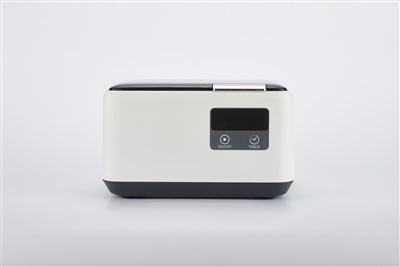
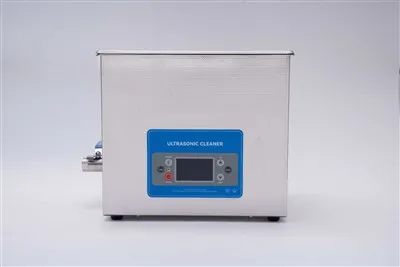
In ultrasonic cleaning applications, like in a 6Liter Ultrasonic Auto Parts Cleaner or a Best size ultrasonic cleaner for bike parts, the Poisson's ratio also plays a role. The transducer needs to vibrate efficiently to create the ultrasonic waves that clean the parts. If the Poisson's ratio isn't ideal, the vibrations might not be evenly distributed, reducing the cleaning effectiveness.
The Poisson's ratio of a Ring Piezo Ceramic Transducer typically ranges from around 0.2 to 0.4. However, this can vary depending on a few factors. The composition of the ceramic is a big one. Different types of piezoelectric ceramics, made with different mixtures of elements like lead, zirconium, and titanium, can have different Poisson's ratios. The manufacturing process also matters. The way the ceramic is sintered, or heated and compressed to form the final shape, can affect its internal structure and thus its Poisson's ratio.
In addition, the frequency at which the transducer operates can have an impact on how the Poisson's ratio affects performance. At higher frequencies, the material's behavior can become more complex, and the effects of the Poisson's ratio might be more pronounced.
When we're manufacturing our Ring Piezo Ceramic Transducers, we pay close attention to the Poisson's ratio. We test and measure it carefully to ensure that our transducers meet the high - quality standards that our customers expect. By controlling the composition and the manufacturing process, we can optimize the Poisson's ratio for different applications.
If you're in the market for a Ring Piezo Ceramic Transducer, it's important to consider the Poisson's ratio in relation to your specific needs. Whether you're using it for testing, cleaning, or something else entirely, understanding this property can help you choose the right transducer for your application.
We've got a wide range of Ring Piezo Ceramic Transducers available, each carefully designed and tested to meet the highest standards. If you have any questions about our products, or if you're interested in a custom solution, don't hesitate to reach out. We're here to help you find the perfect transducer for your project. Whether you're a small business looking for a reliable cleaning solution or a large corporation in need of high - precision testing equipment, we've got the expertise and the products to meet your requirements.
So, if you're ready to take your project to the next level with a high - quality Ring Piezo Ceramic Transducer, get in touch with us today. Let's start a conversation about how we can work together to achieve your goals.
References:
- "Piezoelectric Ceramics: Principles and Applications" by B. Jaffe, W. R. Cook, Jr., and H. Jaffe
- "Ultrasonic Transducers and Arrays: Principles and Applications" by P. C. Huang