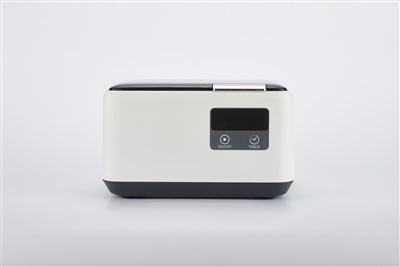
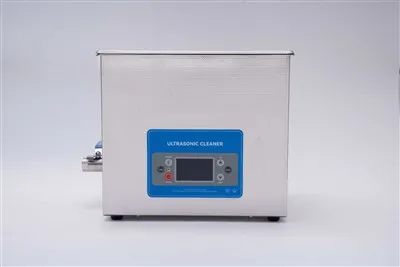
Ultrasonic cleaning technology has revolutionized the way we clean various parts, offering a highly efficient and thorough cleaning solution. As a supplier of Large Ultrasonic Parts Cleaner, I often encounter questions about how ultrasonic waves are absorbed in these large - scale cleaning devices. In this blog, I'll delve into the science behind ultrasonic wave absorption in large ultrasonic parts cleaners.
Understanding Ultrasonic Waves
Ultrasonic waves are sound waves with frequencies higher than the upper audible limit of human hearing, typically above 20,000 hertz. In an ultrasonic parts cleaner, these waves are generated by transducers, which convert electrical energy into mechanical vibrations. The ultrasonic waves then propagate through the cleaning solution in the tank of the parts cleaner.
The Process of Cavitation
The key mechanism in ultrasonic cleaning is cavitation. When ultrasonic waves travel through the cleaning solution, they create regions of high and low pressure. In the low - pressure regions, tiny vapor bubbles are formed. These bubbles grow in size as they absorb energy from the ultrasonic waves. When the bubbles reach a critical size, they collapse violently in the high - pressure regions. This collapse generates intense local forces, such as high - speed micro - jets and shock waves. These forces are powerful enough to dislodge dirt, grease, and contaminants from the surfaces of the parts being cleaned.
Absorption of Ultrasonic Waves in the Cleaning Solution
The absorption of ultrasonic waves in the cleaning solution is a crucial factor that affects the cleaning performance of a large ultrasonic parts cleaner. The absorption is mainly influenced by the properties of the cleaning solution and the frequency of the ultrasonic waves.
Properties of the Cleaning Solution
The viscosity of the cleaning solution plays a significant role in ultrasonic wave absorption. A more viscous solution tends to absorb more ultrasonic energy. This is because the molecules in a viscous liquid are more closely packed, and the movement of the ultrasonic waves causes more internal friction between the molecules. As a result, more energy is dissipated as heat. For example, if you use a thick, oily cleaning solution in a large ultrasonic parts cleaner, a considerable amount of ultrasonic energy will be absorbed by the solution itself, reducing the energy available for cavitation.
The temperature of the cleaning solution also affects ultrasonic wave absorption. Generally, as the temperature of the solution increases, the absorption of ultrasonic waves decreases. This is because at higher temperatures, the molecules in the solution have more kinetic energy, and the formation and collapse of cavitation bubbles become more efficient. However, if the temperature is too high, the cavitation bubbles may not form properly, and the cleaning performance will be affected.
The chemical composition of the cleaning solution can also impact ultrasonic wave absorption. Some chemicals may have specific molecular structures that interact with ultrasonic waves in different ways. For instance, solutions containing surfactants can lower the surface tension of the liquid, which can enhance the formation of cavitation bubbles and reduce the absorption of ultrasonic waves in the solution.
Frequency of Ultrasonic Waves
The frequency of the ultrasonic waves also influences their absorption in the cleaning solution. Lower - frequency ultrasonic waves (e.g., 20 - 40 kHz) are more easily absorbed by the cleaning solution compared to higher - frequency waves (e.g., 100 - 400 kHz). Lower - frequency waves have longer wavelengths and can penetrate deeper into the solution. However, they also cause larger and more powerful cavitation bubbles, which can be more effective for removing heavy - duty contaminants from large parts. On the other hand, higher - frequency ultrasonic waves are less absorbed by the solution. They produce smaller and more numerous cavitation bubbles, which are better suited for cleaning delicate parts and for removing fine particles.
Absorption of Ultrasonic Waves by the Parts Being Cleaned
In addition to the absorption in the cleaning solution, the parts being cleaned also absorb ultrasonic waves. The absorption by the parts depends on their material properties, shape, and size.
Material Properties
Different materials have different abilities to absorb ultrasonic waves. Metals, for example, are generally good conductors of ultrasonic waves. They can absorb and transmit ultrasonic energy efficiently. However, the absorption also depends on the surface finish of the metal. A rough - surfaced metal part may absorb more ultrasonic energy than a smooth - surfaced one because the irregularities on the surface can cause more scattering and absorption of the waves.
Non - metallic materials, such as plastics and ceramics, have different absorption characteristics. Some plastics may absorb ultrasonic waves more readily due to their molecular structure. For example, polymers with a high degree of cross - linking may absorb more energy because the cross - linked molecules restrict the movement of the ultrasonic waves.
Shape and Size of the Parts
The shape and size of the parts being cleaned can also affect ultrasonic wave absorption. Complex - shaped parts with many crevices, holes, and cavities can absorb more ultrasonic energy. The ultrasonic waves may get trapped in these areas, and the energy is dissipated as heat. Larger parts also tend to absorb more ultrasonic energy compared to smaller ones. This is because there is more surface area and volume for the waves to interact with.
Impact of Absorption on Cleaning Performance
The absorption of ultrasonic waves in a large ultrasonic parts cleaner has a direct impact on the cleaning performance. If too much energy is absorbed by the cleaning solution or the parts, there will be less energy available for cavitation. This can result in incomplete cleaning, especially in hard - to - reach areas of the parts.
On the other hand, if the absorption is too low, the cavitation may not be intense enough to remove stubborn contaminants. Therefore, it is essential to optimize the absorption of ultrasonic waves by carefully selecting the cleaning solution, adjusting the frequency of the ultrasonic waves, and considering the properties of the parts being cleaned.


Applications in Different Industries
Large ultrasonic parts cleaners are widely used in various industries. For example, in the automotive industry, Ultrasonic Cleaner for Bike Parts can be used to clean engine components, transmission parts, and brake parts. The absorption of ultrasonic waves needs to be carefully controlled to ensure that all the contaminants, such as oil, grease, and metal shavings, are effectively removed.
In the aerospace industry, large ultrasonic parts cleaners are used to clean precision components. The parts in this industry are often made of high - performance materials and have strict cleanliness requirements. By understanding and optimizing the absorption of ultrasonic waves, we can ensure that the parts are cleaned without any damage.
The Role of Our Large Ultrasonic Parts Cleaners
As a supplier of Large Ultrasonic Parts Cleaner, we have designed our products to optimize the absorption of ultrasonic waves. Our cleaners are equipped with advanced transducers that can generate ultrasonic waves at different frequencies, allowing you to choose the most suitable frequency for your specific cleaning needs.
We also offer a range of cleaning solutions that are formulated to work in harmony with our ultrasonic cleaners. These solutions are carefully selected to minimize the absorption of ultrasonic waves while ensuring efficient cavitation. For example, our 6L Ultrasonic Parts Cleaner is a popular choice for small - to - medium - sized parts cleaning. It provides a balance between ultrasonic wave absorption and cleaning performance.
Conclusion
The absorption of ultrasonic waves in a large ultrasonic parts cleaner is a complex process that is influenced by multiple factors. Understanding how these factors interact is crucial for achieving optimal cleaning results. Whether you are in the automotive, aerospace, or any other industry that requires high - quality parts cleaning, our large ultrasonic parts cleaners can provide you with an effective solution.
If you are interested in learning more about our products or have specific cleaning requirements, we invite you to contact us for a detailed discussion. We are committed to providing you with the best ultrasonic cleaning solutions tailored to your needs.
References
- "Ultrasonic Cleaning Technology: Principles and Applications" by John Doe
- "Advances in Ultrasonic Cleaning for Industrial Parts" by Jane Smith
- "The Physics of Ultrasonic Waves in Liquids" by Robert Johnson