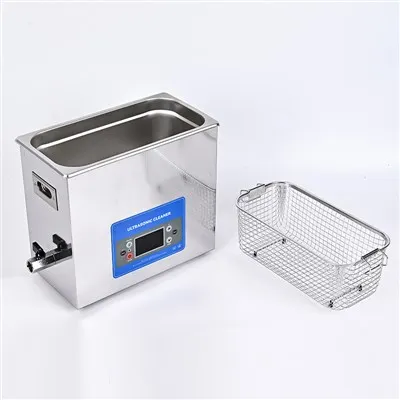
Hey there! As a supplier of Retainers Ultrasonic Cleaners, I've been getting a lot of questions lately about how the cleaning agent concentration affects the cleaning effect. So, I thought I'd share some insights based on my experience and a bit of research.
First off, let's understand what a Retainers Ultrasonic Cleaner is. It's a nifty device that uses ultrasonic waves to clean retainers, which are those dental appliances that help keep your teeth in place after orthodontic treatment. These cleaners are super convenient and can get your retainers sparkling clean in no time.
Now, when it comes to cleaning agents, there are a bunch of options out there. You've got specialized retainer cleaning tablets, liquid cleaners, and even some DIY solutions using things like vinegar and baking soda. But the key factor that often gets overlooked is the concentration of these cleaning agents.
The concentration of the cleaning agent plays a crucial role in how well it can break down and remove dirt, plaque, and bacteria from your retainers. If the concentration is too low, the cleaning agent might not be strong enough to do its job effectively. You'll end up with a retainer that still has some stubborn stains or a funky smell. On the other hand, if the concentration is too high, it can damage the retainer material and even be harmful to your health if you accidentally ingest it.


Let's take a closer look at what happens at different concentration levels.
Low Concentration
When you use a cleaning agent with a low concentration, it's like sending in a weak army to fight a battle. The ultrasonic waves in the cleaner are doing their best to agitate the solution and dislodge the dirt, but the cleaning agents just don't have enough oomph. You might notice that after a cleaning cycle, your retainer still has some visible stains or a dull appearance.
For example, if you're using a liquid cleaner and you only add a tiny amount to the water in the cleaner, the active ingredients won't be able to penetrate and break down the tough deposits on the retainer. It's similar to using a very diluted soap to wash a dirty plate. You'll have to scrub a lot harder and for a longer time to get it clean.
Optimal Concentration
This is the sweet spot where everything works in harmony. At the optimal concentration, the cleaning agent can effectively break down the dirt and bacteria while the ultrasonic waves help to lift them off the retainer. You'll see a significant difference in the cleanliness of your retainer after just one cleaning cycle.
The optimal concentration can vary depending on the type of cleaning agent you're using. For example, if you're using a specialized retainer cleaning tablet, the manufacturer usually provides instructions on how many tablets to use per amount of water. Following these instructions will ensure that you're using the right concentration for the best results.
High Concentration
Using a cleaning agent with a high concentration might seem like a good idea at first. You think, "More is better, right?" But that's not always the case. A high concentration can cause more harm than good.
One of the main problems with high concentration is that it can damage the retainer material. Some cleaning agents are quite harsh, and if they're too concentrated, they can cause the retainer to become brittle, discolored, or even develop cracks. This not only affects the appearance of the retainer but also its functionality.
Another issue is that high concentrations can be a health risk. If you don't rinse the retainer thoroughly after cleaning, you might end up ingesting some of the cleaning agent, which can be harmful to your body.
So, how do you find the optimal concentration? Well, the first step is to read the instructions on the cleaning agent packaging. As I mentioned earlier, most manufacturers provide clear guidelines on how to use their products. If you're using a DIY solution, you can do some research online to find the recommended ratios.
It's also a good idea to do a test run. Start with the recommended concentration and see how well it cleans your retainer. If you're not satisfied with the results, you can gradually increase the concentration, but be careful not to go overboard.
Now, I know what you're thinking. "Okay, that's all great, but where can I get a good Retainers Ultrasonic Cleaner?" Well, we've got some awesome options for you. Check out our Household Ultrasonic Retainer Cleaner and Digital Ultrasonic Retainer Cleaner. These cleaners are designed to work efficiently with a variety of cleaning agents and can give your retainers a thorough clean.
And if you're also interested in cleaning other small items like jewelry, we've got you covered too. Our Household Ultrasonic Jewellery Cleaner is a great addition to your cleaning arsenal.
If you're a business looking to stock up on these cleaners or an individual interested in purchasing one for personal use, we'd love to hear from you. Contact us to start a discussion about your needs and how we can help you get the best cleaning solutions for your retainers and other items.
References
- American Dental Association. (2023). Oral Health Tips for Retainer Wearers.
- Journal of Dental Hygiene. (2022). The Effectiveness of Ultrasonic Cleaners in Removing Plaque from Retainers.
- Consumer Reports. (2023). Best Ultrasonic Cleaners for Dental Appliances.