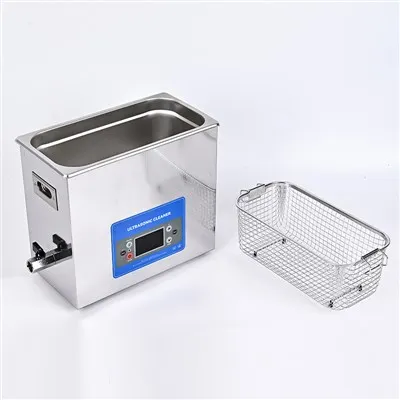
Do powerful ultrasonic parts cleaners work in hard water? This is a question that many of us in the industry often encounter. As a supplier of powerful ultrasonic parts cleaners, I've spent a significant amount of time researching and testing these cleaners in various water conditions. In this blog, I'll share my insights and experiences to help you understand how hard water can affect the performance of ultrasonic parts cleaners.
Understanding Hard Water
Before diving into the effectiveness of ultrasonic parts cleaners in hard water, it's essential to understand what hard water is. Hard water contains high levels of dissolved minerals, primarily calcium and magnesium. These minerals are picked up as water passes through limestone, chalk, or gypsum deposits in the ground. The hardness of water is typically measured in grains per gallon (gpg) or parts per million (ppm). Water with a hardness of 1 - 3.5 gpg is considered slightly hard, while water with a hardness of over 7 gpg is considered very hard.
The presence of these minerals can have several implications for cleaning processes. When hard water is heated or evaporated, the minerals can form deposits known as scale. Scale can build up on the surfaces of cleaning equipment, pipes, and the items being cleaned, reducing the efficiency of the cleaning process and potentially causing damage over time.
How Ultrasonic Parts Cleaners Work
Ultrasonic parts cleaners use high - frequency sound waves to create millions of tiny bubbles in a cleaning solution through a process called cavitation. When these bubbles collapse, they generate a powerful scrubbing action that can dislodge dirt, grease, and contaminants from the surfaces of parts. This method is highly effective for cleaning complex shapes and hard - to - reach areas.


The effectiveness of an ultrasonic parts cleaner depends on several factors, including the frequency of the ultrasonic waves, the temperature of the cleaning solution, the type of cleaning solution used, and the condition of the water.
The Impact of Hard Water on Ultrasonic Parts Cleaners
- Scale Buildup: One of the most significant issues with using hard water in ultrasonic parts cleaners is scale buildup. The calcium and magnesium deposits in hard water can accumulate on the transducer (the component that generates the ultrasonic waves) and the walls of the cleaning tank. This scale can act as an insulator, reducing the efficiency of the ultrasonic waves and preventing them from reaching the parts being cleaned effectively. Over time, severe scale buildup can even damage the transducer, leading to costly repairs or replacements.
- Reduced Cleaning Performance: Hard water can also reduce the cleaning performance of the ultrasonic parts cleaner in other ways. The minerals in hard water can react with the cleaning solution, forming insoluble compounds that can cloud the solution and reduce its ability to dissolve dirt and grease. Additionally, the presence of scale on the parts being cleaned can create a barrier that prevents the cavitation bubbles from reaching the surface, resulting in incomplete cleaning.
- Increased Wear and Tear: The abrasive nature of scale can cause increased wear and tear on the parts being cleaned. As the scale rubs against the surfaces of the parts, it can scratch and damage them, especially if the parts are made of soft materials. This can be a significant concern for industries that require high - precision parts, such as the aerospace and automotive industries.
Solutions for Using Ultrasonic Parts Cleaners in Hard Water
- Water Softening: One of the most effective solutions for using ultrasonic parts cleaners in hard water is to soften the water. Water softeners work by removing the calcium and magnesium ions from the water and replacing them with sodium ions. This process can significantly reduce the risk of scale buildup and improve the performance of the ultrasonic parts cleaner. There are several types of water softeners available, including ion - exchange softeners and salt - free softeners.
- Using Specialized Cleaning Solutions: Some cleaning solutions are formulated to work effectively in hard water. These solutions contain agents that can chelate or sequester the calcium and magnesium ions, preventing them from forming scale and allowing the cleaning solution to work more efficiently. When choosing a cleaning solution for use in hard water, it's important to select one that is compatible with the materials of the parts being cleaned and the ultrasonic parts cleaner.
- Regular Maintenance: Regular maintenance is crucial when using ultrasonic parts cleaners in hard water. This includes descaling the cleaning tank and transducer on a regular basis using a descaling solution. It's also important to monitor the water quality and the performance of the cleaner regularly to detect any issues early and take appropriate action.
Real - World Applications
- DIY Ultrasonic Parts Cleaner: For DIY enthusiasts, using a DIY Ultrasonic Parts Cleaner in hard water can be a challenge. However, with proper water treatment and maintenance, it's still possible to achieve good cleaning results. Many DIYers choose to use water softening techniques or specialized cleaning solutions to overcome the problems associated with hard water.
- Ultrasonic Gun Parts Cleaner for Firearm Maintenance: In the firearms industry, Ultrasonic Gun Parts Cleaner for Firearm Maintenance is widely used to clean and maintain guns. Firearm parts are often made of precision - machined metals, and scale buildup or incomplete cleaning can affect their performance. Using soft water or appropriate cleaning solutions is essential to ensure the longevity and proper functioning of firearms.
- Ultrasonic Cleaner for Bike Parts: Ultrasonic Cleaner for Bike Parts can effectively remove dirt, grime, and grease from bike components. However, hard water can leave behind scale on the delicate parts of a bike, such as gears and chains. By taking steps to address the hard water issue, bike enthusiasts can keep their bikes in top condition.
Conclusion
In conclusion, while powerful ultrasonic parts cleaners can work in hard water, the presence of calcium and magnesium minerals can pose significant challenges. Scale buildup, reduced cleaning performance, and increased wear and tear are all potential issues that need to be addressed. By using water softening techniques, specialized cleaning solutions, and regular maintenance, it's possible to mitigate these problems and ensure the effective operation of ultrasonic parts cleaners in hard water environments.
If you're interested in learning more about our powerful ultrasonic parts cleaners or need advice on using them in hard water conditions, we're here to help. Contact us for a consultation and let's discuss how we can meet your cleaning needs.
References
- "The Basics of Ultrasonic Cleaning" by the Ultrasonic Cleaning Association.
- "Water Quality and Its Impact on Industrial Cleaning Processes" - a research paper from a leading industrial cleaning research institute.
- Manufacturer's manuals for various ultrasonic parts cleaners.