Hey there! As a supplier of UT probes, I often get asked about the frequency range of a typical UT probe. So, I thought I'd write this blog to share some insights on this topic.

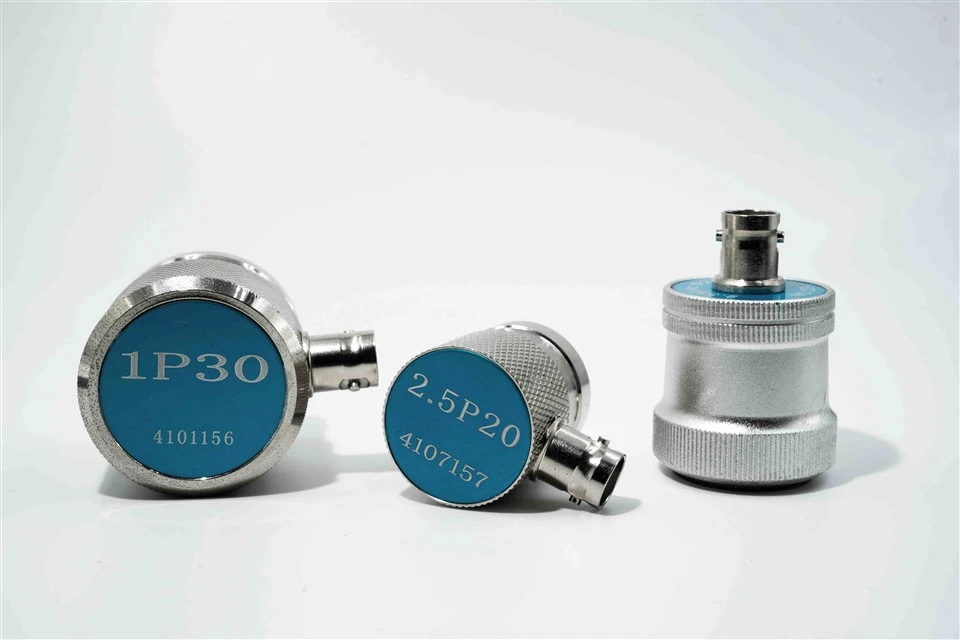
First off, let's understand what UT probes are. UT stands for Ultrasonic Testing, and UT probes are essential tools in this field. They're used to send and receive ultrasonic waves, which help in detecting flaws, measuring thickness, and assessing the quality of materials in various industries like manufacturing, aerospace, and oil and gas.
Now, the frequency range of a typical UT probe can vary quite a bit, and it depends on several factors. Generally, UT probes operate in the frequency range of 2 MHz to 20 MHz. But why this range? Well, it all boils down to the application and the material being tested.
Low - Frequency UT Probes (2 MHz - 5 MHz)
Low - frequency UT probes, typically in the range of 2 MHz to 5 MHz, are great for testing thick materials. When you're dealing with thick pieces of metal, for example, a lower frequency is better because it can penetrate deeper. The longer wavelength associated with lower frequencies allows the ultrasonic waves to travel further through the material without getting too attenuated.
Let's say you're testing a thick steel pipe in an oil refinery. A 2 MHz or 3 MHz UT probe would be a good choice. These probes can send ultrasonic waves deep into the pipe, helping you detect internal flaws like cracks or voids that might not be visible on the surface.
If you're interested in a single - crystal ultrasonic straight probe that can work well in this low - frequency range, check out our Single Crystal Ultrasonic Straight Probe/Transducer. It's designed to provide accurate results when testing thick materials.
Medium - Frequency UT Probes (5 MHz - 10 MHz)
Medium - frequency UT probes, ranging from 5 MHz to 10 MHz, are a popular choice for a wide variety of applications. They offer a good balance between penetration and resolution. These probes can be used for testing materials of medium thickness, such as automotive parts or small - to - medium - sized metal components.
The higher frequency compared to low - frequency probes means a shorter wavelength. This results in better resolution, allowing you to detect smaller flaws. For instance, if you're testing an aluminum engine block in an automotive manufacturing plant, a 7 MHz UT probe can help you spot tiny cracks or inclusions that could affect the performance of the engine.
Our Ultrasonic Transducer for Testing Equipment is suitable for medium - frequency applications. It's versatile and can be used with different types of testing equipment to get reliable results.
High - Frequency UT Probes (10 MHz - 20 MHz)
High - frequency UT probes, in the range of 10 MHz to 20 MHz, are all about high resolution. They're used for testing thin materials or detecting very small flaws. The short wavelength at these frequencies enables the probes to pick up even the tiniest imperfections.
For example, in the electronics industry, when testing thin semiconductor wafers, a 15 MHz or 20 MHz UT probe can detect micro - cracks or delaminations that could cause the device to fail. However, the trade - off is that these high - frequency probes have limited penetration depth. So, they're not suitable for thick materials.
If you need a probe for high - frequency applications, our Dual Crystal Straight Probe for Ultrasonic Non Destructive Detector is a great option. It's designed to provide high - resolution imaging for thin materials.
Factors Affecting Frequency Selection
Apart from the material thickness, there are other factors that can influence the choice of frequency for a UT probe.
The type of material is crucial. Different materials have different acoustic properties, which affect how ultrasonic waves travel through them. For example, materials with high attenuation, like some plastics, may require a lower frequency to ensure sufficient penetration.
The size of the flaw you're trying to detect also matters. If you're looking for very small flaws, a higher frequency probe is usually better. On the other hand, if you're just trying to get a general idea of the internal structure of a material, a lower frequency might be sufficient.
Conclusion
In conclusion, the frequency range of a typical UT probe can span from 2 MHz to 20 MHz, and the choice of frequency depends on the application, material thickness, and the size of the flaws you want to detect. Whether you need a low - frequency probe for thick materials, a medium - frequency probe for general - purpose testing, or a high - frequency probe for high - resolution work, we've got you covered.
If you're in the market for UT probes and want to discuss your specific requirements, don't hesitate to reach out. We're here to help you find the right probe for your needs. Whether it's for a one - time project or regular testing in your production line, we can provide you with high - quality UT probes that will give you accurate and reliable results.
References
- Nondestructive Testing Handbook, Volume 7: Ultrasonic Testing
- ASNT (American Society for Nondestructive Testing) standards on ultrasonic testing