Direct answer: The cleaning-time setting on an ultrasonic jewellery cleaner-also commonly searched as an ultrasonic jewelry cleaner-controls total ultrasonic exposure, but a longer cycle does not automatically produce a better result. Validate time together with the jewellery material, gemstone treatment, setting condition, soil, solution, temperature and load. For an item already confirmed as suitable, begin with the shortest approved cycle, inspect it, and repeat only when the acceptance criteria have not yet been met.
Jewellery cleaning-time decision summary
Suitable for a controlled trial: a structurally sound item whose metal, stones, treatments and setting are known and whose maker or qualified jeweller permits ultrasonic cleaning.
Inspect before every cycle: prongs, channels, soldered areas, clasps and adjacent stones. Time cannot compensate for a loose or damaged setting.
Use professional advice: when the identity, treatment or condition of a gemstone is uncertain, or when the item is valuable, antique or repaired.
Keep out of the tank: pearls and other organic gems, fracture-filled or impregnated stones, coated stones and jewellery that the maker or jeweller excludes from ultrasonic cleaning.
Looking for timer-controlled jewellery cleaning equipment?
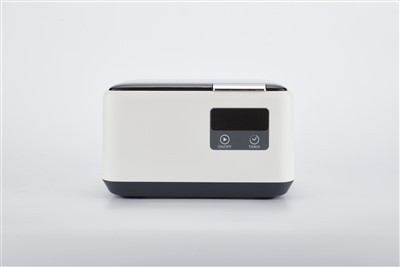
Compare Soner's ultrasonic jewellery cleaner range. If defined cycle choices are important, review the digital ultrasonic jewellery cleaner with timer.
For model selection, send the item dimensions, materials, stones, treatments, pieces per batch and destination market through Contact Us.
How an ultrasonic jewelry cleaner works
Ultrasonic transducers make the liquid alternate between high and low pressure. Microscopic bubbles form and collapse in a process called cavitation. The resulting liquid movement helps dislodge compatible soils from exposed surfaces, recesses and some difficult-to-brush areas. The timer determines how long the item is exposed to this process.
Time is only one process variable. Frequency and power influence the acoustic field; temperature and cleaning chemistry affect how soils are loosened; loading and part position change how energy reaches the item; and a contaminated or poorly prepared bath can reduce repeatability. Adding minutes cannot correct an unsuitable solution, an overloaded basket or a blocked surface.
Cavitation: formation and collapse of microscopic bubbles in the cleaning liquid.
Cycle time: the programmed operating period; it is not proof that an item is safe or clean.
Validated cycle: a documented combination of time, solution, temperature, loading and inspection criteria that has produced an acceptable result on representative items.
How long should you clean jewelry in an ultrasonic cleaner?
Two rings that look similar may contain different alloys, treatments, adhesives or setting conditions. A short cycle can still be inappropriate for an excluded material, while a compatible and heavily soiled production item may require more than one controlled step. For this reason, generic time bands should not be treated as safety rules.
Material and treatment
Compatibility is decided before timing. Some gems and treatments are excluded regardless of cycle length. Record the metal, gem identity, treatment disclosure and maker or jeweller guidance.
Setting condition
Vibration may reveal an already loose stone or weak setting. Record the pre-clean inspection, repairs, prongs, channels and post-clean inspection.
Soil
Light surface film, polishing compound and aged grease do not respond at the same rate. Record the soil type, location and required cleanliness.
Solution and temperature
Chemistry and heat can improve soil removal but can also create compatibility limits. Record the product, concentration, bath temperature, rinse and drying method.
Load and position
Crowding, contact between pieces and acoustic shadowing can make cleaning uneven. Record pieces per batch, basket layout, orientation and clearance.
Compatibility comes before the timer
The Gemological Institute of America advises against ultrasonic cleaning for organic gems such as pearls, coral, ivory and amber; for fracture-filled or impregnated gems; and for some stones affected by heat or coatings. GIA also notes that ultrasonic vibration can shake loose stones or cause adjacent diamond girdles to chip. A timer setting does not remove these risks.
Before a cycle, verify the item and look for loose stones, worn prongs, cracks, chipped girdles, open settings, repair areas and glued components. If treatment information is missing, route the item to a qualified jeweller or gemmologist. A test on a hidden area cannot establish whether a stone is loose internally or whether an undisclosed treatment is present.
A repeatable time-validation method for jewellery businesses
- Define the item family. Group only pieces with comparable metals, stones, treatments, construction and condition. Maintain an exclusion list.
- Define the soil and result. Record whether the target is skin oil, polishing compound or another known residue, and set visual or inspection criteria.
- Fix the other variables. Use the approved solution, concentration, fill level, temperature, basket, load and orientation.
- Start with the shortest approved cycle. Run a representative low-risk or sample item. Do not use a valuable customer piece as the first process trial.
- Stop and inspect. Check the setting and surface under suitable lighting or magnification. Confirm that the acceptance criteria are met before repeating.
- Record cumulative exposure. If a second cycle is permitted, document the total time rather than treating each cycle as independent.
- Approve the operating window. Write the final time, load limit, bath-change rule, rinse, drying, inspection and rejection steps into the work instruction.
When the first cycle is not enough
Inspect the bath and process before simply increasing the timer. Check solution condition, fill level, temperature, load, basket position and whether the soil requires a different compatible chemistry or a pre-cleaning step.
When to stop immediately
Stop if a stone moves, a setting changes, a surface appears altered, the solution changes unexpectedly or the equipment behaves abnormally. Isolate the item and review it before any further cycle.
Choosing a jewellery ultrasonic cleaner for repeatable timing
For B2B selection, compare usable basket dimensions, cycle-control options, working liquid level, batch layout, electrical version, cleaning instructions and after-sales documentation. Nominal tank volume alone does not determine how many pieces can be cleaned or whether a jewelry cleaner machine will deliver a repeatable process. Review Soner's ultrasonic jewellery cleaner range as a starting point, then confirm the current specification of the exact model quoted.
Compact counter use and small batches
Buyers researching a portable ultrasonic jewelry cleaner should first confirm what "portable" means for their operation: external dimensions, weight, power version and usable basket space. Compare the 600 ml ultrasonic jewellery cleaner for small items or limited counter space, then verify timer functions and the proposed item mix.
Timer-led process control
The digital ultrasonic jewellery cleaner with timer is a relevant comparison when operators need defined cycle choices. Confirm the current timer settings and operating instructions for the supplied version.
Professional ultrasonic jewelry cleaner for larger batches
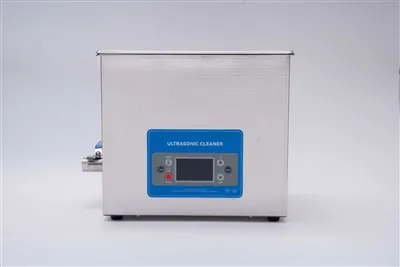
Review the 2L professional ultrasonic jewellery cleaner when the compact model does not provide the required layout. Ask for current internal and basket dimensions rather than choosing by litre rating alone.
OEM and distributor evaluation
For supplier and manufacturing context, see Soner's Production Equipment page. Confirm which assembly, inspection and documentation steps apply to the model and market in your quotation.
What should a B2B buyer send for model selection?
Send the largest item's dimensions and weight, representative photographs, known metals and stones, treatment information, soils, pieces per batch, daily batch count, target result, destination market and electrical requirements. State whether the equipment is for a jewellery workshop, retailer, repair chain, distributor or private-label programme. Ask for current usable dimensions, timer options, operating instructions, packaging and a sample-validation plan for the intended item family.
Need to validate a jewellery-cleaning cycle?
Send Soner your item dimensions, materials, stone and treatment information, soil, batch plan, destination market and required timer control. Ask for a model comparison and proposed sample-test conditions.
Frequently asked questions
Is a longer ultrasonic cycle always better?
No. Once the target soil is removed, extra exposure adds no cleaning benefit. If the result is poor, check compatibility, chemistry, temperature, bath condition, load and position before adding time.
Can I repeat the cycle if jewellery is still dirty?
Only after confirming the item is suitable and inspecting the setting and surface. Record cumulative exposure and stop if the process or item changes unexpectedly.
What is the correct ultrasonic time for diamond jewellery?
There is no universal time. GIA notes that vibration can loosen stones and that fracture-filled diamonds should not be cleaned ultrasonically. Check treatment and setting condition and follow the jeweller's or equipment maker's approved procedure.
Can pearls be made safe by using a short cycle?
No. GIA advises that pearls and other organic gems should not be cleaned in an ultrasonic cleaner. Reducing the timer does not convert an excluded material into a compatible one.
How should a jewellery shop standardise cycle time?
Create item families and an exclusion list, fix the solution and loading variables, validate the shortest effective cycle on representative low-risk items, and document inspection, rinse, drying and bath-change steps.
Sources and scope
GIA's guidance on gems and ultrasonic cleaners supports the material and treatment exclusions in this article. GIA's diamond-care guidance supports the warnings about loose settings, adjacent diamond girdles and fracture-filled stones.
These sources define safety boundaries; they do not prescribe a universal cleaning time or approve a specific Soner model for every item. Final compatibility and cycle settings must follow the jewellery maker or qualified jeweller, cleaning-agent documentation, the current equipment manual and a recorded representative trial.