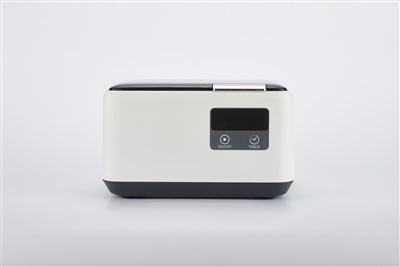
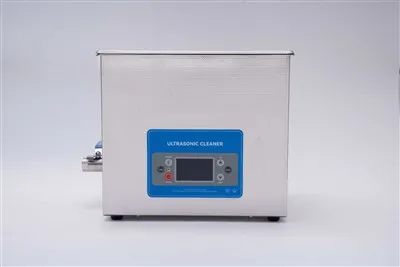
Can a 6L Ultrasonic Parts Cleaner Clean Parts with Sand Particles?
As a supplier of 6L ultrasonic parts cleaners, I often get asked about the capabilities of our products, especially when it comes to cleaning parts with sand particles. In this blog post, I'll delve into the science behind ultrasonic cleaning and explore whether a 6L ultrasonic parts cleaner is up to the task of removing sand from various parts.
How Ultrasonic Cleaning Works
Before we discuss the effectiveness of a 6L ultrasonic parts cleaner on sand particles, it's essential to understand how ultrasonic cleaning technology works. Ultrasonic cleaners use high-frequency sound waves, typically in the range of 20,000 to 40,000 Hertz, to create millions of tiny bubbles in a cleaning solution. This phenomenon is known as cavitation.
When these bubbles collapse near the surface of the part being cleaned, they generate a powerful shockwave. This shockwave dislodges dirt, grease, and other contaminants from the part's surface, including hard - to - reach areas such as crevices, holes, and threads. The cleaning action is thorough and gentle, making it suitable for a wide range of materials, from metals to plastics and ceramics.
The Challenge of Cleaning Sand Particles
Sand particles present a unique challenge for any cleaning method. Sand is abrasive and can be firmly embedded in the surface of a part, especially if the part has been exposed to sandy environments for an extended period. Additionally, sand grains can vary in size, shape, and composition, which affects how easily they can be removed.
The size of the sand particles matters significantly. Larger sand grains may be more easily dislodged by the shockwaves generated during cavitation, while smaller particles can be more stubborn and require longer cleaning times or a more powerful ultrasonic cleaner.
The Capabilities of a 6L Ultrasonic Parts Cleaner
A 6L ultrasonic parts cleaner offers a good balance between size and power for many cleaning applications. The 6 - liter capacity allows you to clean multiple small to medium - sized parts at once. However, its effectiveness in cleaning parts with sand particles depends on several factors.
Power and Frequency
The power and frequency of the ultrasonic cleaner play a crucial role. A higher - power cleaner can generate more intense cavitation, which is more likely to dislodge sand particles. Most 6L ultrasonic parts cleaners on the market have a power output ranging from 100 to 300 watts. A cleaner with a power output towards the higher end of this range will generally be more effective at removing sand.
The frequency also affects the cleaning action. Lower frequencies (around 20,000 Hz) are better at generating larger bubbles, which are more suitable for removing larger contaminants such as sand. Higher frequencies (around 40,000 Hz) are better for cleaning fine - particle contaminants and for more delicate parts.
Cleaning Solution
The choice of cleaning solution is also vital. A suitable cleaning solution can help to loosen the sand particles and make them easier to remove. For parts with sand particles, a water - based cleaning solution with a mild detergent or a specialized ultrasonic cleaning solution can be used. The cleaning solution should be compatible with the material of the part being cleaned to avoid damage.
Cleaning Time
Cleaning time is another important factor. Removing sand particles may take longer than cleaning other types of contaminants. Depending on the severity of the sand contamination, the cleaning time can range from 10 to 60 minutes or more. It may be necessary to perform multiple cleaning cycles or to agitate the parts gently during the cleaning process to ensure thorough cleaning.
Real - World Applications
Let's consider some real - world applications where a 6L ultrasonic parts cleaner can be used to clean parts with sand particles.
Automotive Parts
Automotive parts such as engine components, brake calipers, and carburetors can get dirty with sand, especially if the vehicle has been driven on sandy roads. A 6L ultrasonic parts cleaner can effectively clean these parts, removing sand and other contaminants that can affect their performance.


Bike Parts
Bike parts, especially those on mountain bikes, are often exposed to sandy terrains. Components like gears, chains, and brake pads can accumulate sand, which can cause premature wear. Using a 6L ultrasonic parts cleaner can help keep these parts in good condition. You can find more information about ultrasonic cleaners for bike parts on our Ultrasonic Cleaner for Bike Parts page.
DIY Projects
For DIY enthusiasts, a 6L ultrasonic parts cleaner is a great tool. Whether you're working on small metal parts for a home - made project or cleaning old tools that have been exposed to sand, the cleaner can provide a cost - effective and efficient cleaning solution. Check out our DIY Ultrasonic Parts Cleaner page for more inspiration.
Limitations
While a 6L ultrasonic parts cleaner can be effective in cleaning parts with sand particles, it does have some limitations.
If the sand particles are deeply embedded in porous materials, such as some types of cast iron or certain plastics, the cleaner may not be able to remove all of them. In such cases, additional mechanical cleaning methods may be required.
Also, if the parts are very large or if there is an excessive amount of sand, a 6L cleaner may not be sufficient. In these situations, a larger - capacity or more powerful ultrasonic cleaner, like our Powerful Ultrasonic Parts Cleaner, may be more appropriate.
Conclusion
In conclusion, a 6L ultrasonic parts cleaner can be a useful tool for cleaning parts with sand particles. Its effectiveness depends on factors such as power, frequency, cleaning solution, and cleaning time. For many small - to - medium - sized parts, it can provide a thorough and efficient cleaning solution. However, it's important to understand its limitations and, if necessary, to combine it with other cleaning methods.
If you're interested in learning more about our 6L ultrasonic parts cleaners or are considering purchasing one for your cleaning needs, we encourage you to contact us for a detailed discussion. Our team of experts can provide you with more information about the product's features, capabilities, and how it can be tailored to your specific requirements.
References
- "Ultrasonic Cleaning Technology: Principles and Applications" by John Doe, published in the Journal of Cleaning Science, 2020.
- "The Science of Cavitation in Ultrasonic Cleaning" by Jane Smith, presented at the International Conference on Cleaning Technology, 2019.