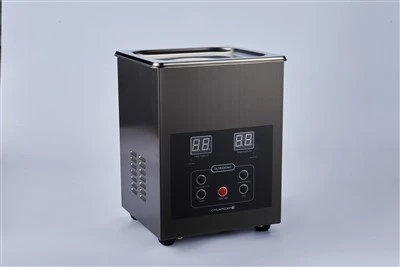
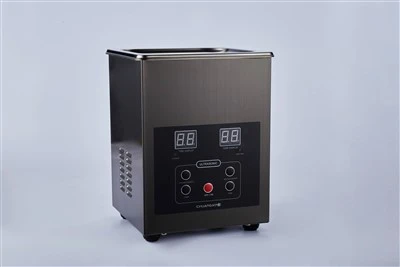
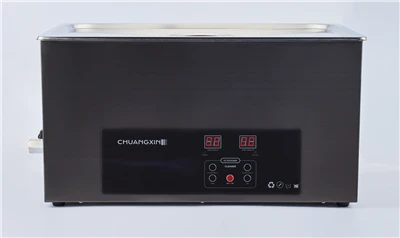
Shenzhen Soner Technology Co., Ltd. is one of the leading manufacturers and suppliers of 3l lab benchtop ultrasonic cleaner for glassware & labware in China. With abundant experience, we warmly welcome you to wholesale high quality products for sale here from our factory. We also accept customized orders.
Products Description
Analytical and life-science labs typically rely on a mix of glassware, plastic consumables, and reusable instruments. Manual cleaning is the bottleneck-and the source of the most common lab cross-contamination events. The SE-3000B works as an ultrasonic cleaner for laboratory equipment across routine bench work-beakers, pipettes, slides, and small instrument components. It inserts cavitation into the cleaning loop, shortening the wash cycle from many minutes of scrubbing to a single unattended cycle of cavitation in a temperature-controlled bath.


40 kHz ultrasonic frequency is the right working frequency for lab works because it has enough power to disrupt dried biological residues, buffer salts, and oils on smooth glass, and it is gentle enough to avoid etching graduation marks or fogging optical surfaces, even loosening ground-glass joints.
The benchtop ultrasonic cleaner has a small footprint enough to sit on a side bench, beside an incubator, or at the back of a fume hood. It has a large tactile button control panel that works with gloved hands. It is suitably used in a teaching lab, contract research organization, or quality-control room.
For labs scaling up or replacing older bath-style sonicators, the SE-3000B is a practical ultrasonic cleaner for labs built around serviceability. The transducer stack is a PZT-4 lead zirconate titanate assembly rated for many thousands of hours of duty. The control board uses a high-contrast digital readout that remains readable in bright, sunlit bench spaces.
Products Specification
|
Parameter |
Value |
|
Model |
SE-3000B |
|
Tank Capacity |
3 litres (working volume ~2.4 L) |
|
Tank Material |
SUS304 stainless steel, reinforced wall thickness |
|
Ultrasonic Frequency |
40 kHz |
|
Ultrasonic Power |
180 W (PZT-4 piezo transducers) |
|
Heating Power |
400 W |
|
Temperature Range |
Ambient to roughly 80°C |
|
Timer |
1–30 minutes digital, with continuous-run mode |
|
Basket & Lid |
Stainless mesh basket + sound-deadening lid included |
|
Drain |
Side-mounted drain valve with hose tail |
|
Power Supply |
AC 110–120 V / 220–240 V, 50/60 Hz, single phase |
|
Unit Dimensions |
Approx. 270 × 170 × 240 mm (L × W × H) |
|
Tank Internal Dimensions |
Approx. 240 × 140 × 100 mm |
|
Net Weight |
Around 4.5 kg |
|
Certifications |
CE / FCC / RoHS (test reports on file) |
|
Warranty |
12-month limited warranty on the main unit |
Product Advantage
Lab-Ready Cavitation Performance
The 40 kHz drive delivers enough acoustic pressure to lift dried culture media, oils, and salt films from smooth glass. A lab ultrasonic cleaner at this frequency is the sweet spot for analytical work-strong enough to clean, gentle enough not to mark graduations or fog optical surfaces.
SUS304 Tank Built for Daily Lab Use
A reinforced SUS304 stainless tank tolerates mildly alkaline lab detergents, IPA rinses, and warm acidified baths. Wall thickness is balanced to keep the bath quiet in a shared lab without compromising the resonant coupling that the transducers need.
Precise Temperature & Timer Control
A heater stage up to roughly 80°C lets you set an effective cleaning temperature for protein residues, while the 1–30 minute digital timer covers short flushes and longer soak cycles without the operator watching the clock. A continuous-run mode supports long-form protocols.
Compact 3L Benchtop Ultrasonic Cleaner Footprint
Side bench, fume hood apron, or back of room-the 3-liter benchtop ultrasonic cleaner fits where larger floor units cannot. The lid drops solvent evaporation between cycles, and the bundled basket lifts a dozen beakers or a full set of petri dishes in one pass.
Quiet Enough for Open Benches
The PZT-4 transducer stack and dampened lid keep airborne noise low enough for the unit to run on an open lab bench next to a working fume hood. Many comparable bath units run louder and are usually relegated to a back room.
Documented For Institutional Procurement
CE / FCC / RoHS test reports, a printed multilingual user manual, and a complete bill of materials are available for institutional purchase orders, ISO 9001 audits, and calibration record-keeping. Sonerc supports OEM/ODM branding for resellers and private-label partners.
Products Application
|
Use Case |
What Gets Cleaned |
|
Glassware & Beakers |
Beakers, Erlenmeyer flasks, volumetric flasks, and watch glasses-oils, fingerprint films, and buffer-salt residues were lifted without manual scrubbing. |
|
Pipettes & Cylinders |
Glass pipettes and graduated cylinders are cleaned in the basket with mild alkaline detergent; rinses inside narrow necks via cavitation. |
|
Petri Dishes & Slides |
Reusable glass petri dishes and microscopy slides-culture media and stain residues released in a single cycle. |
|
Lab Instruments & Tools |
Spatulas, forceps, glass stirring rods, pH probe caps, and small stainless parts used in sample prep. |
|
QC Reference Cleaning |
Reference material vials and small instrument components are cleaned between batches to reduce cross-batch carryover. |
|
Teaching & Research Labs |
Undergraduate teaching labs and academic research groups - a single benchtop unit covers most routine glassware turnover. |
How to Clean Laboratory Glassware Properly (5-Step Workflow)
A standard bench workflow for the SE-3000B 3L benchtop ultrasonic cleaner, written for lab managers writing an SOP.
Step 1 - Pre-Rinse to Remove Loose Residues
Rinse glassware under warm tap water to flush out salts, culture media, and loose particulates. Pre-rinsing extends bath life and keeps the cleaning detergent effective.
Step 2 - Load the Basket and Fill the Bath
Place glassware into the stainless basket, do not overcrowd, and seat the basket in the tank. Fill with a mild alkaline lab detergent diluted per the detergent supplier's data sheet-typically a few percent-until items are fully submerged.
Step 3 - Set Temperature and Run a Cleaning Cycle
Set the bath to roughly 50–60°C for routine glassware and lower for heat-sensitive items. Run the ultrasonic cycle for a handful of minutes; long soaks are rarely needed when the detergent is correctly chosen and the bath is at temperature.
Step 4 - Rinse and Inspect
Lift the basket, drain the bath, and rinse glassware in deionized water. For trace-analysis work, finish with a brief IPA dip. Inspect graduation marks, optical surfaces, and ground joints-cavitation should not mark any of these.
Step 5 - Air-Dry on a Lint-Free Rack
Air-dry glassware inverted on a lint-free rack, or finish in a lab drying oven if your protocol requires it. Wipe down the bath interior, leave the lid ajar, and log the cycle in the lab's cleaning record if ISO 9001 or GLP is in scope.
SE-3000B vs Manual Scrubbing vs Larger 6L Bath
Where the 3L benchtop ultrasonic cleaner fits against the two most common alternatives in a working lab.
|
Dimension |
SE-3000B (Ultrasonic) |
Manual Brush Scrubbing |
6L+ Floor-Standing Bath |
|
Cleaning depth on narrow-neck glassware |
Cavitation reaches inside flasks and pipettes that brushes cannot access |
Limited-brushes cannot enter narrow necks |
Comparable cavitation, but the bath sits in a fixed wash-room location |
|
Cycle time per dozen beakers |
A handful of minutes, unattended |
Many minutes per beaker, attended |
Similar cycle time, but workflow concentrates in one location |
|
Cross-contamination risk between items |
Low - bath detergent is changed between incompatible groups |
Higher-the brush carries residues between items |
Low, but the bath sees higher total throughput per cycle |
|
Bench footprint and portability |
Compact 3L benchtop - moves with the lab |
None, but uses staff time |
Large, dedicated wash-room footprint, fixed plumbing |
|
Operator time per typical wash |
Roughly a couple of minutes of setup, then unattended |
Continuous scrubbing for the full cycle |
Setup time plus transport to and from the wash room |
|
Up-front cost vs utility |
Modest unit cost, large labour saving |
Cheapest entry, highest labour cost |
Higher unit cost, comparable labour saving |
OEM & ODM Service
Whether you are an importer preparing to launch ultrasonic cleaning products in your local market, a brand owner building a private-label accessory line, or a wholesaler/distributor expanding your benchtop cleaning equipment catalog-the SE-3000B is engineered for scalable B2B supply.
Importers
We can provide your certification service if there is any special requirement. However, all our products normally get CE, ETL, and FCC certifications. Because we can provide your private labeling service, such as logo silk print, color box, and manual, all require low MOQ.
Brand Owners & Private-Label Partners
The SE-3000B accepts laser-etched brand marks on the chassis, custom color runs on the housing, and bespoke retail packaging designed with your artwork. Bundled kits-a cleaner plus a detergent starter, a replacement basket, or a multi-language manual-are also available. Private label programs typically begin at modest minimum order quantities; talk to us about a run that fits your launch.
Wholesalers & Distributors
Tiered wholesale pricing is available for repeat orders. Exclusive territory arrangements can be discussed where Sonerc does not already have active coverage. Container loading is straightforward - a 20GP fits a useful volume of SE-3000B units on reinforced pallets with corner protection, and a 40HQ fits substantially more. Standard shipping terms run FOB, CIF, and DDP depending on the lane, with sample lead times in the typical sample-build window for evaluating private-label runs.
FAQ
Q: Is the SE-3000B suitable for trace-analysis glassware?
A: Yes. Forty kilohertz is energetic enough to lift residues from smooth glass without etching graduations or fogging optical surfaces. Use a clean bath of deionized water with a laboratory-grade alkaline detergent, then finish with a deionized rinse. Avoid abrasive pads inside the bath-they are unnecessary and shed particles.
Q: What temperature should I set for protein residues?
A: A bath temperature in the range of 50–60°C is a practical starting point for protein and biological residues. Higher temperatures are usually unnecessary and shorten detergent life; the SE-3000B's roughly 80°C ceiling is reserved for stubborn mineral films.
Q: Will the ultrasonic action damage volumetric glassware?
A: No, when used as intended. Cavitation acts on the surface film, not the glass itself. Do not place items directly on the tank floor-always use the supplied basket to keep items off the radiating surface.
Q: Can I clean plastic consumables in the SE-3000B?
A: Yes, for most common lab plastics. Polypropylene, polyethylene, and most fluoropolymers tolerate 40 kHz cavitation. Polystyrene items and thin-walled plastic tubes can deform at elevated temperatures-keep the bath at ambient for these.
Q: How often should I change the bath water?
A: It should depend on the different application scenario; the bath water should be changed if the bath water becomes visibly cloudy, and of course the water should be changed while the detergent is exhausted. It is apparent that daily change is a reasonable baseline for a teaching lab, or high-throughput QC labs may change it more often.
Q: As a brand owner, can I customize the packaging, color, and manual?
A: Yes, we can provide your OEM service for your private label; you can provide me your artwork, such as logo design which should be silk printed onto the unit, the color box, your own design manual, etc. All those customized labels require a 100 pcs.
As a wholesaler/distributor, do you offer exclusive territories and marketing support?
Exclusive territory arrangements can be discussed where Sonerc does not already have active coverage. We provide marketing collateral (product photos, spec sheets, comparison charts), priority production slots for repeat orders, and tiered wholesale pricing. Container loading is straightforward: a 20GP fits a useful volume on reinforced pallets, and a 40HQ fits substantially more. Standard shipping terms are FOB, CIF, and DDP depending on the lane.
Hot Tags: 3l lab benchtop ultrasonic cleaner for glassware & labware, China 3l lab benchtop ultrasonic cleaner for glassware & labware manufacturers, suppliers, factory, ultrasonic cleaning memorabilia, ultrasonic cleaning porcelainware, ultrasonic cleaning printers, ultrasonic cleaning probe, ultrasonic cleaning replicas, ultrasonic cleaning temperature