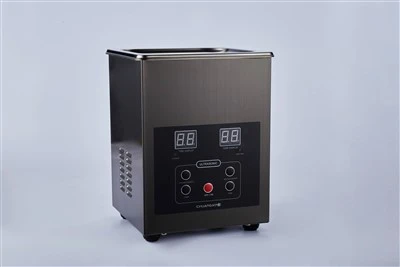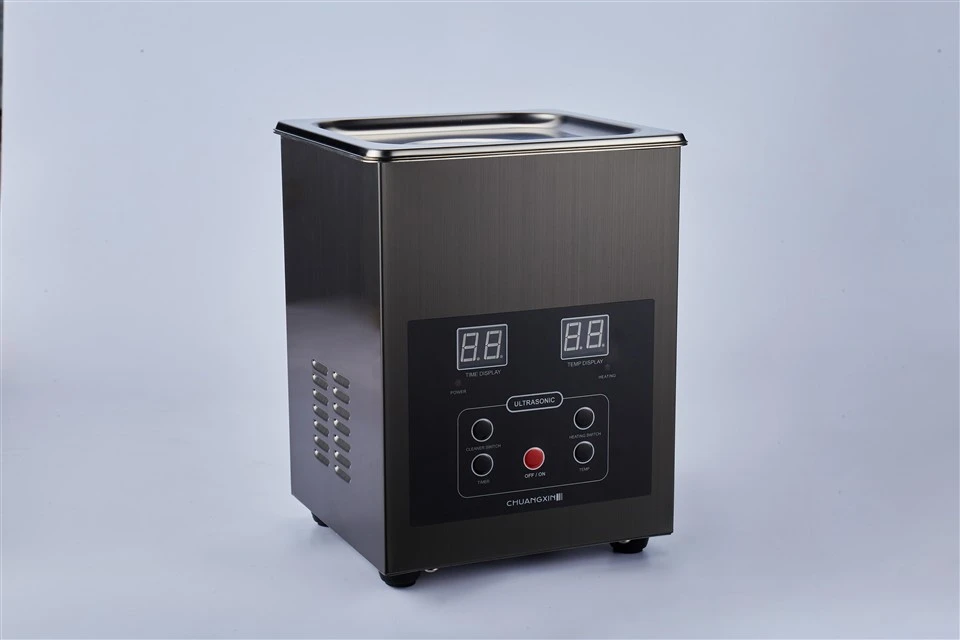
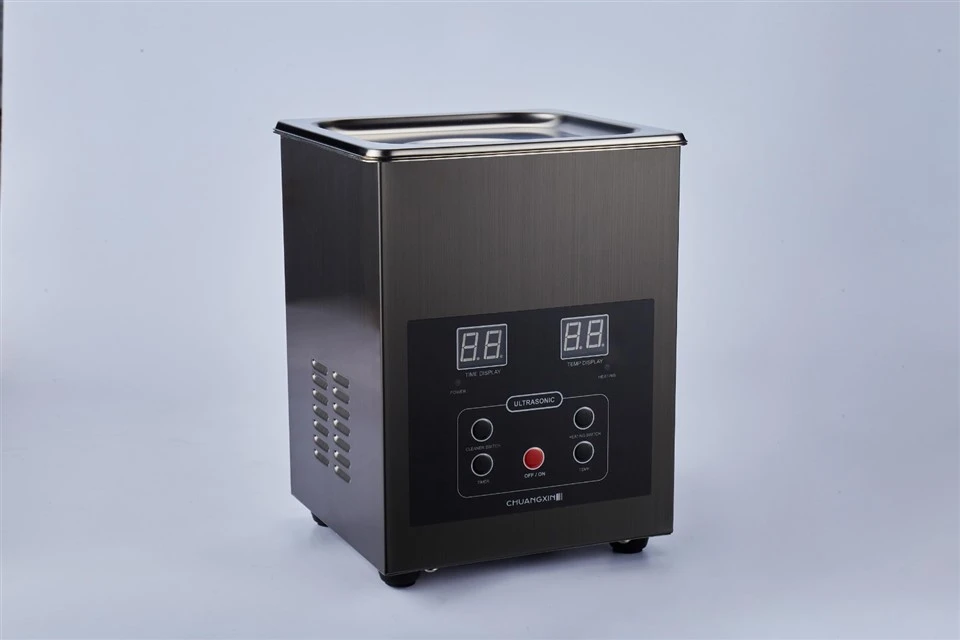
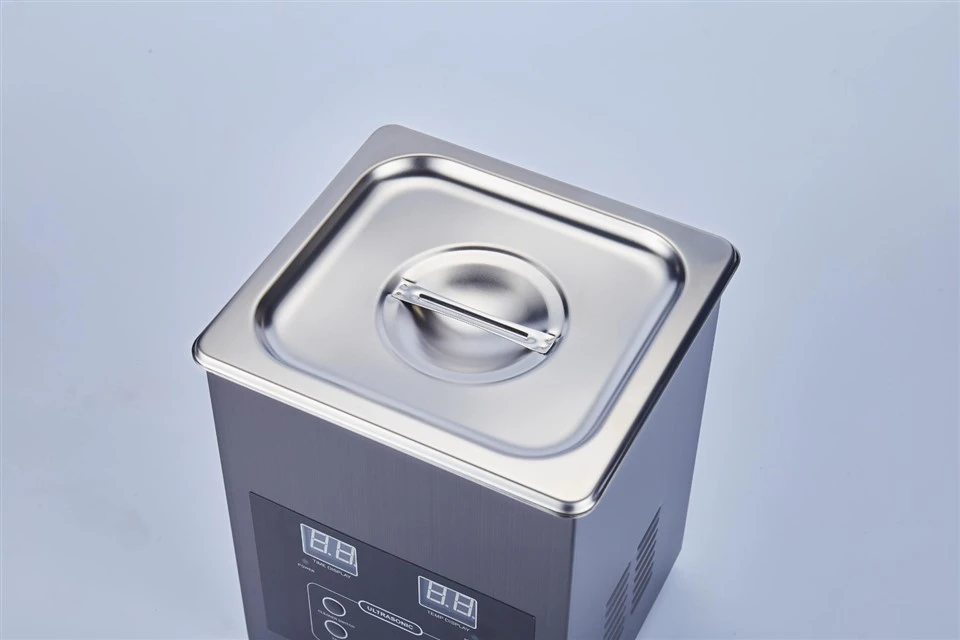
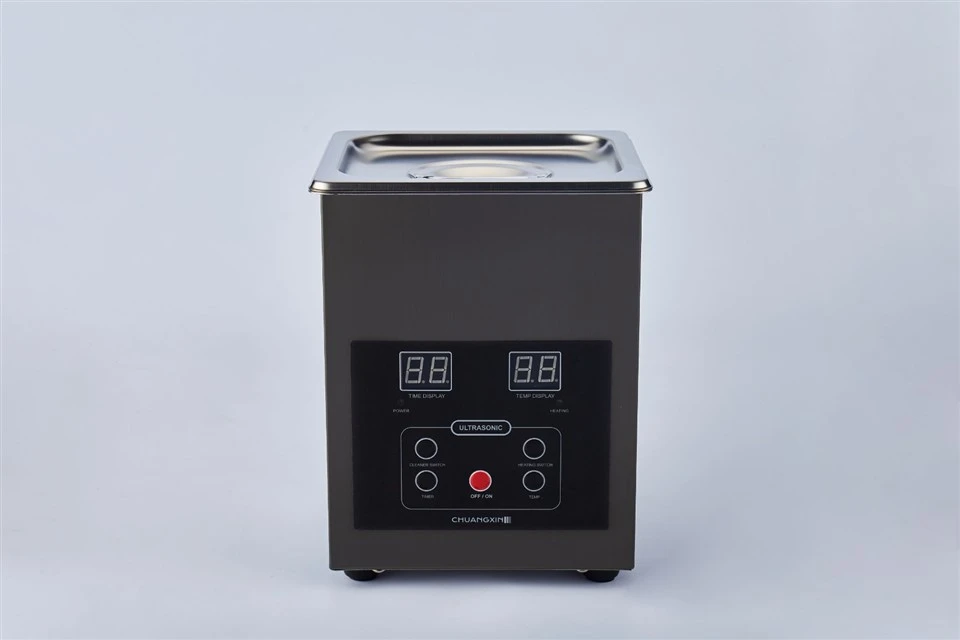
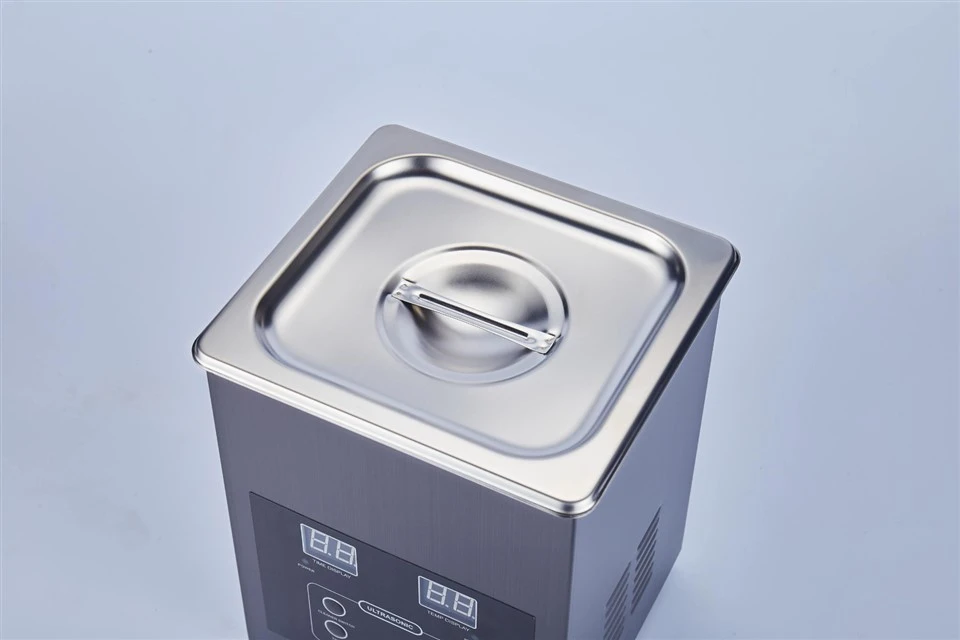
Products Description
As an ultrasonic cleaner for resin prints, which is addressing the most labor-intensive step in resin 3D printing, such as cleaning uncured photopolymet residue from printed parts. Comparing to the traditional manual cleaning with brushes, swabs, and spray bottles removes surface tackiness. These trapped residues weaken the final parts by a noticeable margin even after UV post-cure, because standard curing station expose only the outer surface to UV photons while the inner core remains incompletely polymerized.
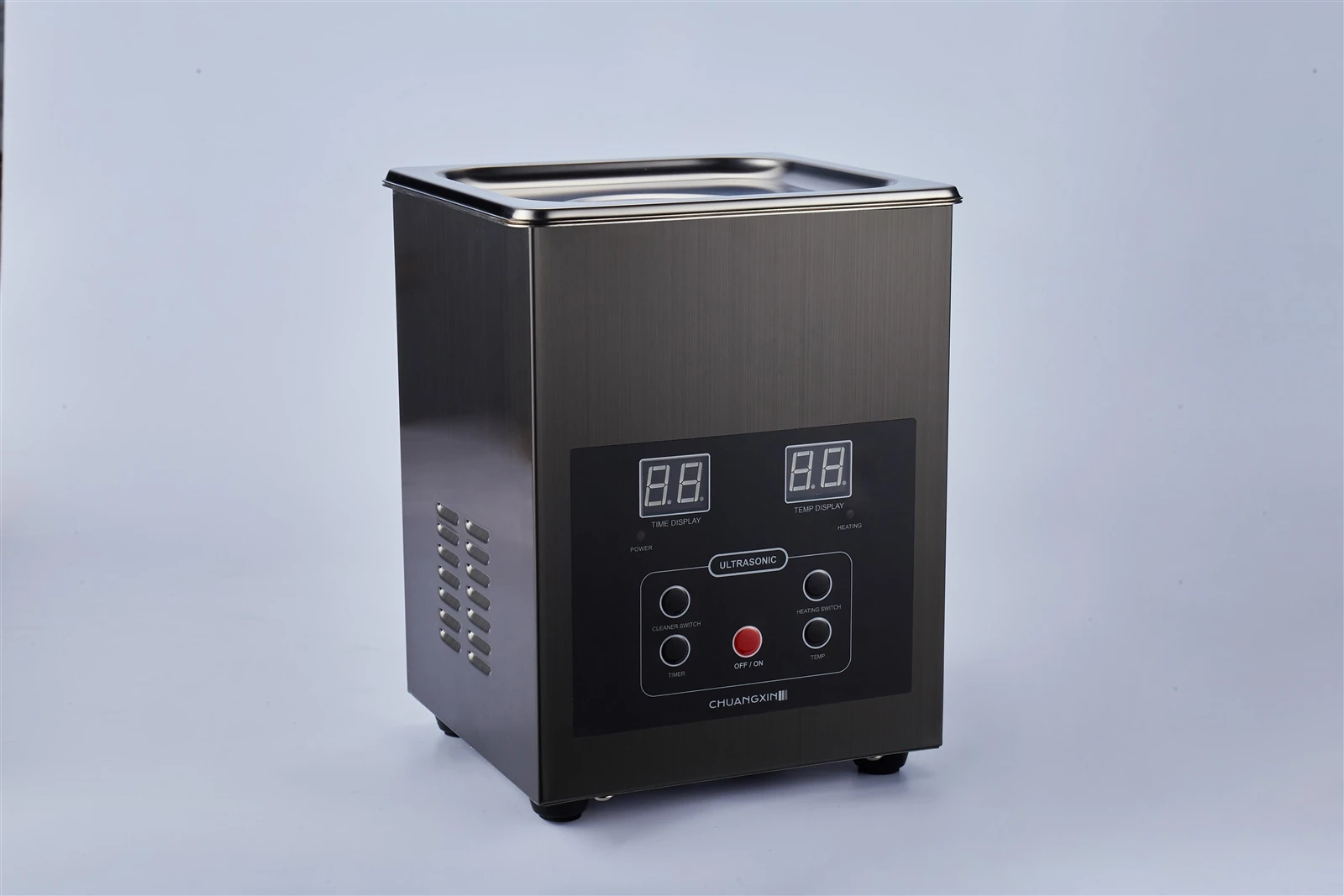
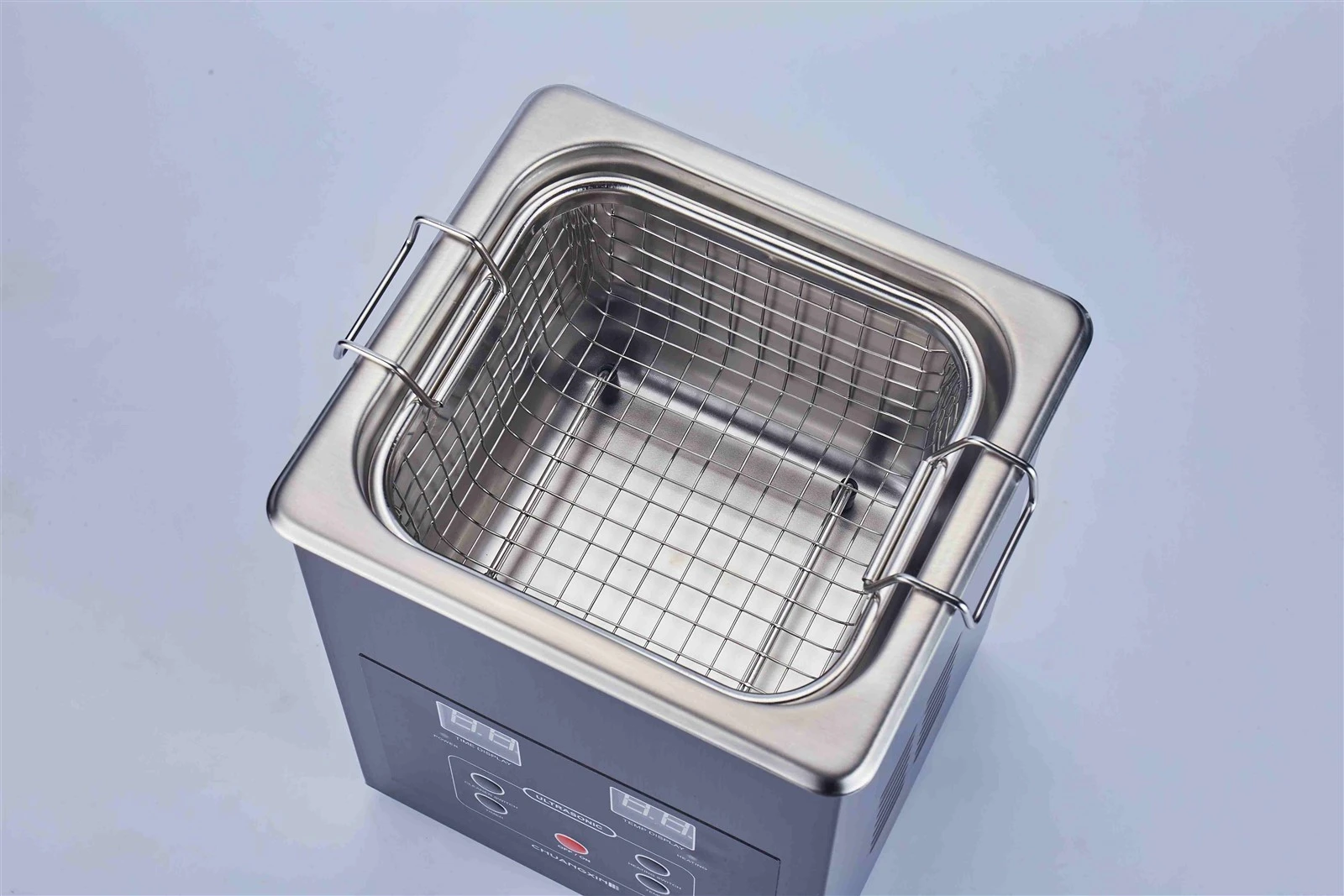
The 3D print ultrasonic cleaner operates by generating ultrasonic cavitation at the industry-standard 40kHz, which drives IPA solvent into these micro-pores through pressure pulses, dissolving unpolymerized photopolymer and flushing it out of the part. For a typical mid-sized engineering print, ultrasonic cleaning collapses total cleaning time from roughly a quarter-hour of manual scrubbing down to a handful of minutes of unattended operation, while lifting part strength noticeably through more complete resin removal. The 2L tank capacity is calibrated for the everyday print batch - a few miniatures, a couple of dental models, several jewelry patterns, or a single full build platform of small parts.
The stainless-steel tank is fully compatible with isopropyl alcohol (IPA), tripropylene glycol monomethyl ether (TPM), and water-washable cleaning concentrates from manufacturers like Phrozen, Anycubic, and Formlabs. The piezoelectric transducer delivers consistent cavitation energy across the tank base, while the built-in heater pre-warms solvent to the optimal cleaning range without approaching the flash point of IPA. The digital timer supports both short rinse cycles for draft prints and longer deep-clean protocols for engineering-grade resins.
This pre-soak + ultrasonic protocol is the ultrasonic cleaner for 3D printing approach now standard in dental laboratories, jewelry pattern studios, and engineering prototyping shops that produce high-value parts where support-mark damage is unacceptable. Cavitation extracts dissolved resin much faster than passive immersion, which means noticeably shorter solvent contact time per part and a clear reduction in IPA consumption over a working week.
For 3D printer brands, resin manufacturers, and print-service bureaus evaluating the SE-2000B as a resin print cleaning machine to bundle, rebrand, or distribute, our factory-direct supply program supports bulk orders, distributor partnerships, and custom branding programs with predictable
Products Specification
| Parameter | SE-2000B (3D Print Edition) |
Model
| SE-2000B
|
Product Name
| 2L Benchtop Ultrasonic Cleaner for 3D Print Resin Removal
|
Compatible Print Technologies
| SLA, DLP, MSLA, LCD (anycubic, Elegoo, Phrozen, Formlabs, Prusa, Creality)
|
Tank Capacity
| 2 Liters
|
Tank Dimensions
| 150 × 135 × 100 mm (L×W×H) - fits 192×120mm build platforms flat
|
Unit Dimensions
| 175 × 160 × 200 mm
|
Tank Material
| SUS304 Stainless Steel, IPA-compatible
|
Ultrasonic Frequency
| 40 kHz - optimal for resin dissolution
|
Ultrasonic Power
| 50 W
|
Total Power
| 70 W (50W ultrasonic + 20W heater)
|
Heating Temperature
| Ambient to 60°C, ±2°C accuracy - pre-warm solvent to 25–40°C optimal range
|
Timer Range
| 0 – 30 minutes, digital LED
|
Transducer Type
| PZT-4 piezoelectric, Soner-manufactured
|
Housing Material
| ABS engineering plastic, white
|
Power Supply
| 100–240V AC, 50/60Hz (specify at order)
|
Protection
| Overheat auto-shutoff, water level sensor
|
Solvent Compatibility
| IPA (99%), TPM, water-washable cleaning concentrates, mean green (resin dissolver)
|
Solvent NOT Compatible
| Acetone (attacks ABS housing), MEK, toluene, methylene chloride
|
Accessories
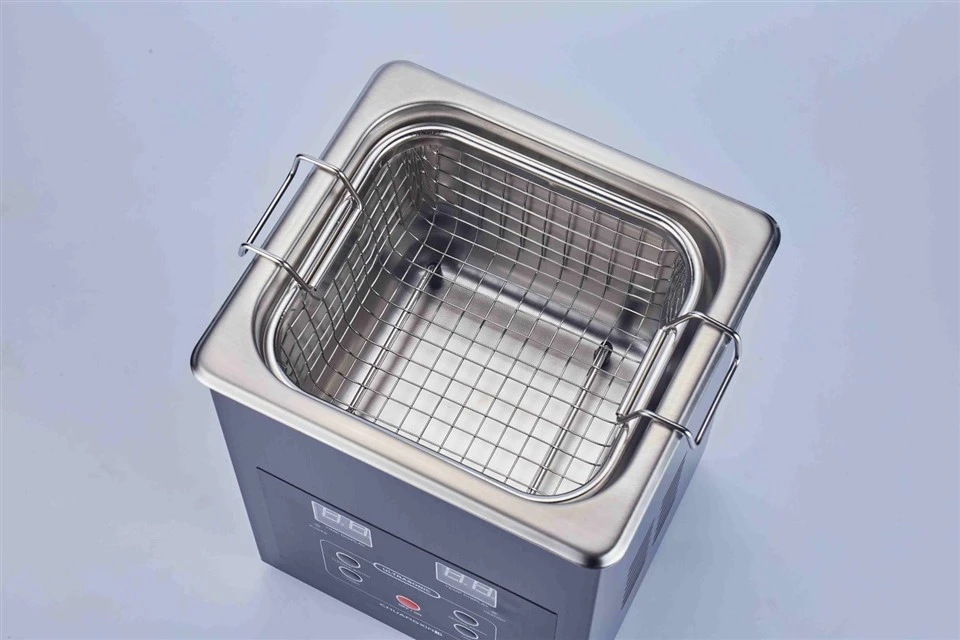
| SUS304 basket, stainless steel lid, IPA-resistant silicone gasket
|
Net Weight
| 1.8 kg
|
Certifications
| CE, FCC, RoHS, KC
|
Packaging
| Export carton with foam insert
|
Warranty
| 12 months from shipment
|
Products Advantage
· Purpose-built cavitation for resin dissolution - the industry-standard frequency for SLA, DLP, and LCD resin removal; finer bubble size lifts uncured photopolymer from thin walls and lattice structures that the lower frequencies on industrial cleaners leave behind.
· IPA-compatible stainless-steel tank with silicone gasket - runs continuously with isopropyl alcohol, TPM, and water-washable cleaning concentrates; the lid cuts evaporation dramatically, so a single IPA charge typically lasts well over many cleaning cycles.
· Built-in pre-warm heater with tight PID control - brings solvent into the comfortable working temperature window; warm IPA cuts resin noticeably faster than ambient solvent, trimming the average cycle time per print batch.
Compact 3D print ultrasonic cleaner footprint - fits beside the 3D printer on a standard workbench and leaves room for the printer, wash station, and post-cure UV chamber in a single workflow zone. For buyers comparing the best ultrasonic cleaner for resin in this size class, the SE-2000B delivers the same cavitation energy as pro units at roughly twice the price, which is why it is the default pick for studios, labs, and educational programs on a tight equipment budget.
· Digital timer with a wide range - supports a quick rinse for draft prints, a standard cycle for production parts, and a longer deep clean for engineering-grade and high-temperature resins that hold residual monomer.
· Water-level sensor - prevents dry operation that would overheat and damage the transducer if solvent evaporates during extended cleaning cycles.
· Soner-manufactured transducer - proprietary sandwich-structure bonding to the tank; rated for many thousands of hours of operation; withstands daily prototyping lab use without output drift or frequency shift that would compromise cleaning uniformity.
Commercial-grade stainless-steel tank with reinforced wall thickness - designed for a full production shift of daily operation; suitable for worldwide shipping with reinforced foam-in-place packaging tested to common drop and vibration standards.
Backed by an in-house engineering team with two decades of ultrasonic transducer design - every SE-2000B unit is bench-tested for frequency tolerance before packing, ensuring the batch-to-batch consistency that our distribution partners expect.
· CE / FCC / RoHS / KC certified - full documentation provided for customs clearance and end-customer compliance audits; suitable for sale in North America, Europe, South Korea, and most Asian markets.
Products Application
The SE-2000B slots into the resin post processing equipment workflow at the cleaning stage, sitting between the print bed and the UV post-cure chamber. It handles every major workflow where fresh resin must be lifted from printed parts before the final cure pass.
Across all of these workflows, the SE-2000B serves as a wash station alternative to magnetic stirrers and manual IPA baths, with deeper cavitation into micro-pores that the other two methods cannot reach.
How to Clean Resin Prints Properly
Below is the standard 5-step protocol that most 3D print studios, dental labs, and engineering prototyping shops follow with the SE-2000B. Cycle times below are starting points - adjust for part geometry, resin type, and how aggressive you want the cleaning pass.
Step 1 - Remove support structures.
Before the part touches solvent, snap or cut away the support tips with flush cutters. This prevents the supports from snapping off inside the tank and contaminating the IPA with chunks of cured support, and it avoids leaving a sharp divot in the part surface where the support used to attach.
Step 2 - Place prints into IPA.
Lower the build platform (or remove the parts and place them into the basket) into the tank. Make sure the IPA fully covers every surface, including internal channels and lattice openings. For the SE-2000B, a single fill of the 2L tank covers several miniatures or one full build plate of small parts.
Step 3 - Run ultrasonic cleaning for 4–8 minutes.
Set the timer to a standard cycle for most parts. Engineering-grade and high-temperature resins typically need the longer end of the range. You will see the IPA turn cloudy as dissolved resin enters the solvent - that is the cleaning working.
Step 4 - Dry completely.
Lift the basket out, drip-dry for a minute over the tank, then blow off the residual IPA with compressed air or a low-heat air gun. Trapped solvent in micro-pores is the most common cause of surface blush and post-cure haze, so do not skip this step.
Step 5 - UV post-cure.
Transfer the dry part to a UV curing chamber - either a 405 nm LED cure box or a multi-wavelength fluorescent unit. Most resins reach full mechanical properties within a few minutes of post-cure; dental and engineering grades benefit from the longer end of the resin-maker's recommended cure time.
Ultrasonic Cleaner vs Wash & Cure Station
All-in-one wash-and-cure stations are popular with beginners for their simplicity, but once you start running production batches, the gap to a dedicated ultrasonic cleaner becomes obvious. The table below compares the two setups across the dimensions that matter to a working print lab.
| Dimension | Dedicated Ultrasonic Cleaner (SE-2000B) | All-in-One Wash & Cure Station |
| Cleaning depth | Cavitation reaches into micro-pores, thin walls, and lattice geometries that a stirrer or manual bath cannot touch. Cleaner part interiors, less post-cure haze.
| Relies on a stirrer or paddle mechanism in a small chamber. Surface clean, internal channels often retain uncured resin.
|
| Cycle time per print | A short unattended ultrasonic cycle plus a separate post-cure pass. Total hands-on time per batch is minimal.
| Longer combined wash+cure cycle in a single unit. Many models run a full 15–20 minutes before the part is ready.
|
| IPA consumption | Closed tank with a lid. A single IPA charge is reused across many cycles before needing replacement.
| Open or semi-open wash chamber. IPA evaporates faster and typically needs topping up every few batches.
|
| Upfront cost | Standalone cleaner (this product) plus a separate post-cure box. Two modular units, each replaceable independently.
| One combined unit, lower entry price. But replacement parts and bundle upgrades tend to be more expensive.
|
| UV post-cure quality | Paired with a dedicated cure chamber that delivers uniform 360° exposure. Best results for dental and engineering resins.
| Built-in cure LEDs are often lower power and uneven. Acceptable for hobby resins, marginal for engineering.
|
The bottom line: a dedicated ultrasonic cleaner is the right pick for studios and labs that care about clean part interiors, predictable cycle times, and modular replacement of the cleaning vs. curing stages. An all-in-one wash and cure station is fine for a beginner's first setup, but you will outgrow it.
| Application | Resin Type | Printer Compatibility | Typical Cycle |
Miniatures & Tabletop
| Standard grey/tough resin
| Anycubic Photon, Elegoo Mars, Phrozen Sonic
| 3–5 min
|
Dental Models
| Dental model resin ( biocompatible )
| Formlabs Form 3, SprintRay Pro, Phrozen Sonic 4K
| 4–6 min
|
Jewelry Patterns
| Castable wax resin
| Formlabs Form 2/3, Phrozen Sonic Mini, Elegoo Saturn
| 4–6 min
|
Engineering Prototypes
| ABS-like / polycarbonate-like
| Anycubic Photon Mono X, Elegoo Saturn 2
| 6–8 min
|
Investment Casting Patterns
| Castable resin (high-temp)
| Formlabs Castable Resin, Phrozen Aqua-Gray 4K
| 8–10 min
|
Hobby / Cosplay
| Standard / flexible resin
| Anycubic, Elegoo, Creality, Voxelab
| 3–5 min
|
Dental Surgical Guides
| Surgical guide resin (rigid)
| Formlabs SG01, SprintRay Pro, Ackuretta
| 5–7 min
|
Educational / Maker Space
| Standard / tough resin
| Anycubic Photon Mono, Elegoo Mars 3
| 3–5 min
|
OEM/ODM Service
The SE-2000B 3D Print Edition is available for OEM and private-label customization for 3D printer manufacturers, resin producers, and 3D printing service bureaus. Minimum order quantities for custom branding start at 50 units. Customization options include: laser-etched logo on housing, custom color ABS injection to match printer brand palette, retail packaging with multi-language manuals (EN/DE/FR/ES/JA/ZH), private-label compliance documentation, and bundled starter kits with IPA, nitrile gloves, and cleaning concentrate. For resin producers, we can co-brand the unit as a recommended accessory for your resin line. Contact Soner sales for branding lead times and packaging design support.
FAQ
Q: Is the SE-2000B safe to use with IPA inside?
A: Yes. The tank, basket, and lid are all SUS304 stainless steel, fully compatible with 99% isopropyl alcohol. The ABS housing and silicone gasket are also IPA-resistant for incidental contact during basket insertion and removal. Important safety notes: never heat the tank above 40°C when using IPA, never operate near open flames or sparks, always use in a well-ventilated area, and use the lid to reduce evaporation and IPA vapor exposure. The 60°C heater on this unit is reserved for water-based cleaning concentrates-for IPA, operate in the 25–40°C range.
Q: Can the SE-2000B clean prints from my Anycubic / Elegoo / Phrozen / Formlabs printer?
A: Yes. The SE-2000B works with any 3D printer that uses UV-curable photopolymer resin, including all major consumer and prosumer models: Anycubic Photon / Photon Mono / Photon X series, Elegoo Mars / Saturn / Jupiter series, Phrozen Sonic / Sonic Mini / Shuffle / Transform series, Formlabs Form 2 / Form 3 / Form 3L, Prusa SL1 / SL1S, Creality LD-002R / Halot series, Voxelab Polaris / M-series, and Ackuretta Dentiq / Sol Plus. The 2L tank accepts build platforms up to 192 × 120 mm flat. For larger build platforms, see the 6L and 10L models in our benchtop range.
Q: How does ultrasonic cleaning compare to a magnetic stirrer or manual wash station?
A: Ultrasonic cleaning is 3–5× more effective at removing trapped wet photopolymer from thin walls and lattice structures than a mechanical agitator because cavitation pressure pulses penetrate micro-pores that mechanical stirring cannot reach. Versus a manual wash station (IPA bath + brush), ultrasonic cleaning reduces cycle time from 15–20 minutes of scrubbing to 4–8 minutes of unattended operation and reduces IPA usage by 60–80% because the closed-loop tank uses the same IPA charge for 20+ cycles. The result is cleaner parts, faster throughput, and lower operating cost per print.
Q: Should I use IPA or water-washable cleaning concentrate?
A: It depends on the resin type. Standard, tough, flexible, dental-model, and most engineering resins clean well in 99% IPA. Water-washable resins (Anycubic Water-Wash, Elegoo Water-Washable, Phrozen Aqua-Gray 4K) are designed to be cleaned in plain water or mild detergent, which is safer and cheaper than IPA - but water-washable prints are more susceptible to humidity and require thorough drying before UV post-cure. For lost-wax technique resins, IPA is preferred because water can leave mineral deposits that interfere with burnout. For high-temperature engineering resins, a 2-step protocol (pre-soak in cleaning concentrate, then ultrasonic in IPA) gives the best results. Contact our technical team for resin-specific recommendations.
Q: What is the IPA consumption per cleaning cycle?
A: The 2L tank uses approximately 1.5L of IPA per fill (working volume with basket). With the lid in place, a single IPA charge lasts 20+ cleaning cycles before resin saturation requires replacement-the IPA changes from clear to amber as dissolved resin accumulates, and cleaning effectiveness drops noticeably when saturation is reached. For a typical hobby or small-business user printing 2–4 parts daily, this translates to roughly one IPA change per 2–3 weeks. Used IPA can be filtered through a coffee filter and reused or disposed of per local solvent waste regulations.
Q: Can I use this cleaner for water-washable resin?
A: Yes. Set the heater to 30–40°C and fill the tank with warm water plus 1–2% of standard dish soap or a water-washable cleaning concentrate. Cycle time is the same as IPA (3–8 minutes depending on resin). Important: thoroughly dry parts with compressed air or a low-heat convection oven after cleaning because residual water in micro-pores can interfere with UV post-cure and leave cloudy surface defects. The SE-2000B's SUS304 tank is fully compatible with water-based cleaning - no corrosion risk.
Q: What about post-cure? Do I need a separate UV curing chamber?
A: Yes. Ultrasonic cleaning and UV post-cure are separate steps. The cleaning process removes trapped resin from the part surface and internal pores. The post-cure process polymerizes the remaining resin layer to its final mechanical properties. We recommend pairing the SE-2000B with a UV post-cure chamber-either a 405 nm UV LED box (Anycubic Wash & Cure, Elegoo Mercury, or Phrozen Cure Luna) or a 36W 365/405 nm fluorescent curing box. The cleaning protocol is as follows: ultrasonic (4–8 min IPA) → drip dry (2 min) → compressed air blowoff → UV post-cure (2–10 min depending on resin). For dental and engineering resins, post-cure time is critical for final tensile strength and dimensional stability.
Q: Is the SE-2000B compatible with all resin types?
A: Yes, for standard, tough, flexible, castable, water-washable, dental, and most engineering resins. High-temperature resins (Formlabs High-Temp V2, Loctite 3843, Phrozen TR300) may require 2-step cleaning: pre-soak in cleaning concentrate (5–10 min) to soften resin, then ultrasonic in IPA (6–10 min). Ceramic-filled resins (Formlabs Ceramic, Phrozen C-100) clean well in IPA but require careful basket handling to avoid chipping delicate features. Always consult the resin manufacturer's recommended cleaning protocol and adjust cycle time / temperature accordingly.
Q: What is the difference between the 2L SE-2000B and the 6L SE-6000B for 3D printing?
A: The SE-2000B (2L) is sized for individual users, hobbyists, dental offices, and small service bureaus printing 3–8 parts per day. The 6L SE-6000B serves small to medium service bureaus and print farms with 15–40 parts per day throughput, with the added benefit of adjustable ultrasonic power (20–100%) for delicate dental and engineering parts vs. aggressive cleaning for production-scale throughput. For most users, the 2L SE-2000B is the right starting point; scale up to 6L or 10L only when daily print volume exceeds the 2L tank's batch capacity (typically 8–12 parts per day).
Q: Does the SE-2000B work with FDM prints (PLA, ABS, PETG, TPU)?
A: The SE-2000B is purpose-built for resin-based 3D printing (SLA/DLP/MSLA/LCD). For FDM prints, ultrasonic cleaning is not required - FDM parts do not have uncured residue to remove. If you need to clean FDM parts of support material residue or general debris, a standard 2L benchtop cleaner works, but the SE-2000B's IPA-compatible design is overkill for that use case. For dual-technology labs printing both resin and FDM, the SE-2000B handles the resin workflow; a separate general-purpose cleaner can be used for FDM parts if needed.
Q: Do you offer free samples, and what is the sample lead time for evaluation?
A: Yes. We provide a free sample of the SE-2000B (freight collect) for qualified buyers. Standard sample turnaround is a few business days; private-label samples with a custom logo take a bit longer. Send an inquiry to our sales team with your company name and target market to start.
Q: What are the shipping terms and consolidated loading for large-volume orders?
A: For container-load purchases, we support FOB Shenzhen, CIF, and DDP terms. A 20GP container holds roughly 700 units; a 40HQ fits well over 1,500 units. Mixed-SKU skids are accepted with a small per-skid configuration fee. We declare HS code 8479.89 and pre-issue CE, FCC, and RoHS certificates with every commercial invoice to streamline customs clearance in destination ports.
Hot Tags: 3d print ultrasonic cleaner for resin removal (sla / dlp / msla / lcd), China 3d print ultrasonic cleaner for resin removal (sla / dlp / msla / lcd) manufacturers, suppliers, factory